
Deck & Patio Cleaning in Greenville, SC
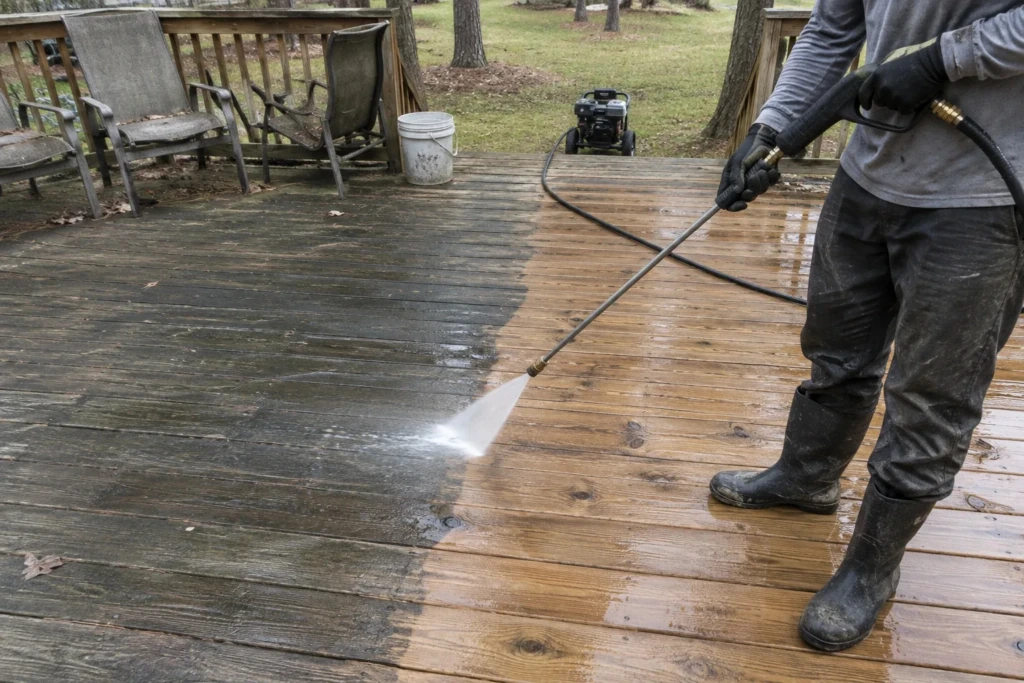
Deck and patio cleaning in Greenville, SC typically costs about $150 to $500 for a wood deck (30 to 80 cents per square foot), with concrete and pavers priced by area. The method has to match the surface: wood gets moderate pressure plus a cleaner and brightener, composite gets low pressure and soft brushing, concrete gets a surface cleaner, and pavers get gentle treatment so the joint sand stays put. If you plan to stain, wait about 48 to 72 hours of dry weather after cleaning. Below is how each surface is handled, what to expect, and how to avoid the common mistakes.
Match the Method to the Surface
Wood Decks (Pressure-Treated Pine, Cedar)
Wood is soft and easily scarred. We use about 500 to 1,200 PSI, work with the grain, and keep the nozzle moving with a fan tip so we avoid fuzzing and lap marks. Some guides allow higher settings, but the higher you go the more risk to the wood fibers and any remaining stain.
Cleaning begins with a wood cleaner that kills mildew and loosens old finish. After the wash we apply a brightener to restore the natural color and balance the wood’s pH. That brightener step is what helps stain or sealer adhere, and skipping it is the most common reason DIY decks look blotchy.
Composite Decking
Composite boards resist rot but not mold, and they can scratch under harsh pressure. Trex, for one, says mold feeds on pollen and dirt left on the surface. Its guide allows a pressure washer no higher than 3,100 PSI with a fan tip held at least 8 inches from the boards on its newer lines, and says earlier product lines should not be pressure washed at all.
We stay well below that ceiling: low pressure, a cleaner suited to composite, and soft brushing where needed. Follow your manufacturer’s instructions, since pressure limits and cleaners vary by brand and year. Test any acid-based product in a hidden spot first, because it can lighten some boards.
Concrete Patios
Concrete patios handle higher pressure. We use a surface cleaner for flat areas to avoid stripes, with a cleaner for algae, mildew, and organic stains. Rust spots from furniture legs need an acid-based remover. See our driveway cleaning page for more on concrete stains.
Pavers and Flagstone
Pavers need care because high pressure blows sand out of the joints. We clean at appropriate pressure, let the surface dry, re-sand the joints with polymeric sand, and recommend sealing once it cures. Full details are on our paver cleaning and sealing page.
Signs Your Deck or Patio Needs Cleaning
- Green or black patches, especially in shade or near the ground.
- Slippery boards when wet, which is a safety concern for stairs.
- Gray, weathered wood with no water beading on the surface.
- Furniture legs leaving rust or dark rings.
- Leaves and pollen packed into gaps between boards.
- Peeling or worn stain that no longer protects the wood.
Wood, Composite, or Concrete: Cleaning Method at a Glance
- Wood: 500 to 1,200 PSI, fan tip, with the grain, cleaner plus brightener, 48 to 72 dry hours before stain.
- Composite: low pressure, soft brush, composite cleaner, follow the brand’s guide, never a narrow tip.
- Concrete: surface cleaner, algae treatment, acid-based remover for rust.
- Pavers: controlled pressure, dry, re-sand with polymeric sand, seal only after it cures.
Stain and Seal Timing
Wood must be fully dry before stain goes on. After cleaning and brightening, allow about 48 to 72 hours of dry weather before staining or sealing, and longer if the wood was soaked or the weather is humid. Staining too early traps moisture, which causes peeling and blotches. Upstate humidity can slow drying, so plan a window with a few dry days.
If your deck has a failing stain, old coating may need to be stripped first. Staining is a separate step from cleaning, and we can quote it with the wash or you can use your own stain contractor. Most outdoor wood benefits from re-staining every 2 to 3 years, depending on sun and traffic.
Our Deck and Patio Cleaning Process
- Assess. We identify the material, check for loose boards, popped nails, and rot, and note any existing finish.
- Protect. We pre-wet and cover plants, move or avoid furniture, and protect siding and screens.
- Treat. The right cleaner goes on and dwells so it does the work instead of pressure.
- Wash. We wash with the grain at suitable pressure, or with a surface cleaner on concrete.
- Brighten. On wood, we apply a brightener and rinse it fully.
- Rinse and manage runoff. We rinse thoroughly and keep wash water out of storm drains, which Greenville County regulates.
- Final check. We review the work with you and point out repairs or finishing you might want to schedule.
Deck and Patio Cleaning Cost
Typical Greenville-area pricing for wood deck cleaning is about 30 to 80 cents per square foot, with most decks falling around $150 to $500. Pavers cost about 30 cents to $1.00 per square foot to clean and seal, and sealing alone runs about 50 cents to $2.50 per square foot. Concrete patios are usually priced similarly to driveways. A firm price comes from a quote. See our pricing guide for more.
What moves the price:
- Square footage and height. A ground-level deck is quicker than an elevated one.
- Stairs and railings. They take as long as the floor in some designs.
- Old stain. Stripping a failing coating is a separate, labor-heavy step.
- Heavy mildew or gray wood. Needs a second application or brightener pass.
- Staining or sealing. Staining labor and product are usually quoted on top of cleaning.
- Heated water. Adds 10 to 15 percent, and is rarely needed for decks.
What to Expect Afterward
- Green and black growth and surface dirt come off, and weathered gray wood often returns to a warmer tone after brightening.
- Wood that is deeply gray, cracked, or splintered will look cleaner, but cleaning cannot repair damage.
- Wet wood looks darker for a day or two. Judge the color once it dries.
- Rot, soft boards, and loose railings do not clean away. We flag them, and repairs are separate.
- Without stain or sealer, wood will start to gray and grow mildew again. Cleaning and finishing work as a pair.
Cleaning Schedule by Surface
- Wood decks: clean once a year, ideally in spring, and re-stain every 2 to 3 years.
- Composite decks: clean once or twice a year, more often under trees.
- Concrete patios: clean every 1 to 2 years, or when algae makes the surface slick.
- Pavers: clean every 1 to 2 years and reseal every 2 to 4 years.
Shaded back yards and decks close to the ground stay damp longer and need cleaning more often. Sweeping leaves off regularly, keeping planters on risers, and trimming back overhanging branches all slow the return of mildew. If you are buying or selling, a clean deck and patio is one of the cheapest ways to improve how a home looks in photos and showings.
DIY or Hire a Pro?
A deck is one of the better DIY projects if you use the right tools. A garden hose, deck cleaner, and a soft brush handle light mildew on wood or composite with little risk. The trouble starts with a rented pressure washer and a narrow tip, which can gouge boards in seconds.
- DIY works for light mildew, small decks, composite cleaned by hose and brush, and sweeping.
- Hire a pro for large or elevated decks, heavy gray weathering, old stain removal, concrete or paver patios, and when you want a stain-ready finish.
- Cost check: cleaner, brightener, stain, rental, and a weekend of work add up to a figure close to a professional cleaning.
Questions to Ask Any Deck Cleaner
- What PSI and nozzle do you use on my material?
- Do you apply a brightener and neutralize the cleaner?
- What do you do for composite, and do you follow the manufacturer’s guide?
- Is staining included, or just cleaning? What dry time do you recommend before stain?
- How do you protect my plants and siding?
- Can you show proof of insurance?
Red Flags to Watch For
- A narrow 0 or 15 degree tip used on wood or composite.
- Bleach alone on wood, with no brightener or neutralizing rinse.
- Staining the same day as the wash.
- Quotes with no mention of stairs, railings, or stain removal.
- A pressure-washed paver patio with no plan to re-sand the joints.
Common Mistakes to Avoid
- Using high pressure on soft wood, which leaves fuzzy, scarred boards.
- Skipping the brightener, which leaves blotchy results.
- Staining before the wood has dried.
- Using bleach alone, which can discolor wood and harm plants.
- Blasting sand out of paver joints and not replacing it.
Make It a Full Outdoor Refresh
Decks look best when the house behind them is clean too. A deck wash is often paired with house washing so the siding and railings match. We serve Greenville and nearby areas including Verdae, Powdersville, and Easley. Browse all pressure washing services.
Near Wade Hampton? See our surface-by-surface guide to patio and deck cleaning in Wade Hampton.
Concrete patios and pool decks are covered in more detail on our concrete cleaning page.
Call (864) 477-1558 or request a free quote and we will get back to you with a clear written price.
Thinking about sealing a concrete patio after cleaning? Read should you seal a concrete patio.
Why This Matters Here
Humid Upstate summers and shaded back yards keep wood decks and patios damp, so mildew and algae return quickly. Long drying times in humid weather also matter when planning a stain.
Wood deck cleaning typically runs about 30 to 80 cents per square foot, with most decks landing around $150 to $500. Stairs, railings, heavy mildew, and old stain removal raise the price. Composite and concrete are priced by area. We provide a firm quote after reviewing photos or visiting.
Yes, if the pressure is controlled. We use about 500 to 1,200 PSI, work with the grain, and use a fan tip at a safe distance. A wood cleaner and brightener do most of the work. Too much pressure or a narrow nozzle leaves fuzzy, scarred boards.
A brightener is an acid-based wash applied after cleaning that restores wood color and neutralizes the cleaner. It helps stain and sealer soak in evenly. If you plan to stain, it is worth doing. Skipping it is a common cause of blotchy finishes.
Wait about 48 to 72 hours of dry weather after cleaning and brightening, and longer in humid conditions or if the wood was soaked. Staining damp wood traps moisture and causes peeling. A moisture check or a simple water-sprinkle test can confirm it is ready.
No. We need access to the areas being cleaned and an outside water spigot. Move cars, grills and planters off the work area and close windows before we arrive. If you are home we walk the result with you at the end; if not, we can send photos when the job is done.
We use your outside spigot for most residential work and do not need electricity. For roofs and siding the soft wash rig carries its own tank where that helps. If your home is on a well or has low water pressure, mention it when you request a quote so we can plan around it.
Get a Free Quote
Serving Greenville, SC and the Upstate. Call (864) 477-1558 or request a quote online. We reply quickly to every request.