Driveway Cleaning in Greenville, SC
A professional driveway cleaning in Greenville, SC usually costs about $150 to $650 and takes one to three hours. It removes red clay film, black algae, tire marks, and fresh oil, and it should leave the concrete evenly light with no stripes. Rust and old oil often lighten but may not vanish, and a good company tells you that before the work starts. This page covers what is included, what moves the price, how to prepare, and what to ask before you hire.
What Is Actually on Your Driveway
Different stains need different treatment, so a good cleaner identifies them before turning on the machine.
- Red clay. Upstate soils are clay-heavy, and clay splashes, tracks, and washes onto concrete after every storm. The fine, iron-rich particles settle into the pores of the surface. Our guide on why red clay stains concrete faster explains why.
- Algae and mildew. Green and black growth thrives where the driveway stays damp: shaded edges, low spots, and areas under trees. It is slippery when wet, so it is a safety issue as well as a looks issue.
- Oil and grease. Fresh drips lift easily with a degreaser. Old stains have soaked in and may need a poultice or repeat treatment. See how to remove oil stains from a driveway for the details.
- Rust. Orange freckles that do not respond to normal cleaning are usually iron staining from well water, fertilizer, or metal items. Rust needs an oxalic or phosphoric acid based remover. Bleach and plain pressure will not remove it and can set it deeper.
- Tire marks, leaf tannins, and dirt. Fall leaves leave brown tannin stains that look like a shadow after the leaves are gone.
Surface Cleaner vs Pressure Wand
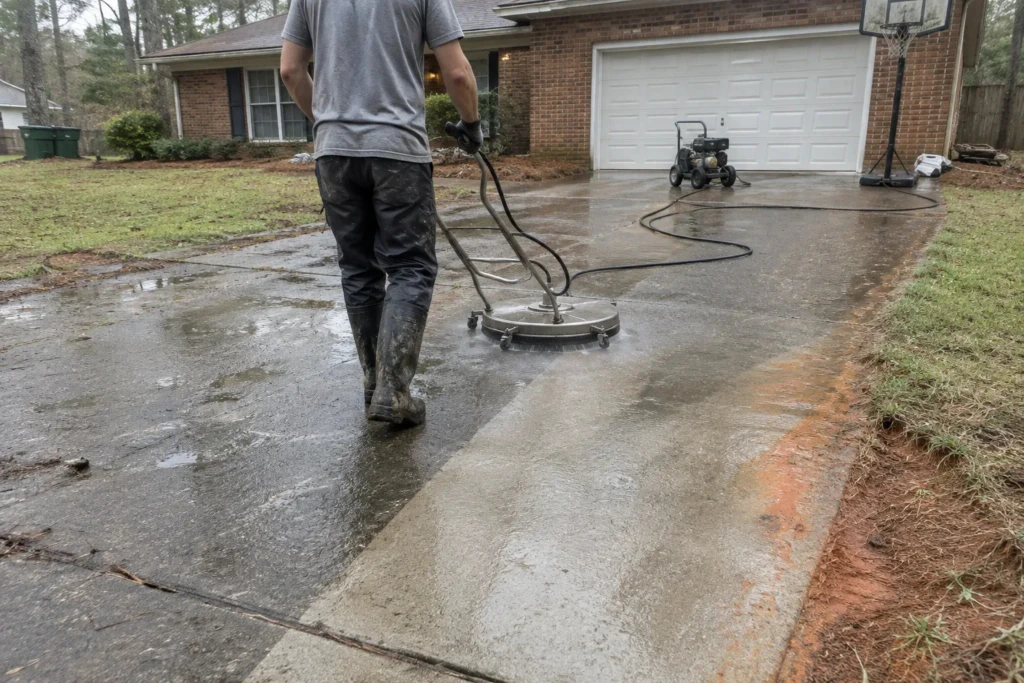
This is the biggest difference between a professional result and a DIY one. A bare wand held over concrete cuts narrow clean lines, and when the nozzle height or your walking speed varies you get the zebra stripes homeowners complain about. A rotary surface cleaner is a spinning arm in a hood that keeps the spray at a constant height and overlaps evenly, so the whole slab comes out uniform.
For driveways we run a surface cleaner at roughly 3,000 to 4,000 PSI with 4 to 8 GPM of water flow. Flow matters as much as pressure, because the volume of water is what carries dirt away and speeds the job. The wand still gets used, at a safe distance, for edges, steps, curbs, expansion joints, and areas beside siding where a hooded cleaner will not fit.
Concrete Types and Why They Matter
- Broom-finished concrete is the most common and hides stains well, but the grooves trap clay and algae.
- Smooth or older concrete shows tire marks and etching more, so we use lower pressure and let the detergent work.
- Stamped or colored concrete may have a sealer that aggressive cleaning can strip. Tell us if yours is stamped.
- Pavers have sand joints that blast out under high pressure. They get a separate process: see paver cleaning and sealing.
- Asphalt is softer and can be damaged by hot, high-pressure water, so it gets a gentler approach.
- New concrete needs time to cure before it is cleaned. If your slab was poured recently, ask your installer how long to wait.
What a Driveway Cleaning Quote Should Include
A clear quote saves arguments later. Before you say yes, make sure the price in writing covers these points.
- The square footage or the areas covered: main slab, apron, walkway, steps, and any curbing.
- The method: surface cleaner for the flat areas, wand only for edges and joints.
- Pre-treatment for algae, plus whether oil and rust treatment are included or extra.
- Whether heated water is part of the price (heated service generally costs 10 to 15 percent more).
- How wash water is handled, so detergent does not run into the street.
- Whether the company brings its own water or needs your spigot.
Our Driveway Cleaning Process
- Walk-around. We note stains, cracks, loose joints, and anything that needs protection.
- Protect. Nearby plants are pre-wet and shielded, and cars, bikes, and basketball goals are moved or avoided.
- Pre-treat. A cleaning solution goes on for algae and organic growth, plus a degreaser on oil and an acid-based product on rust where needed. Dwell time does much of the work.
- Surface clean. We work in overlapping passes, then hand-wand edges and joints.
- Rinse and runoff control. We rinse thoroughly and manage the water so detergents stay out of storm drains. Greenville County treats that kind of discharge as a stormwater violation.
- Final check. We look at the dry surface with you and touch up anything we missed.
Driveway Cleaning Cost in Greenville
Typical Greenville-area pricing runs about $150 to $650 per driveway, or roughly 8 to 30 cents per square foot. A standard two-car driveway sits in the lower to middle part of that range. The final number comes from a quote, and our pressure washing cost guide shows how the other services compare.
Here is what moves the price up or down:
- Size. A long driveway with a turnaround, parking pad, and walkway can cost several times more than a short one.
- Condition. Heavy algae, years of clay, and deep tire marks take longer and more product.
- Rust and oil. These are separate treatments and are often priced as add-ons.
- Access. Steep slopes, tight gates, and no water spigot slow the crew.
- Heated water. Useful for grease, but it adds 10 to 15 percent.
- Minimum charge. Many companies have a minimum, so a very small slab may cost more per square foot.
What Your Driveway Will Look Like Afterward
Expect a big change, not magic. Clay film, algae, pollen, and dirt come off almost completely on most driveways. The concrete will often look several shades lighter and more even.
Some things lighten without disappearing. Oil that has soaked in for years, ground-in tire marks, and rust from well water may leave a faint shadow. Concrete that is cracked, patched with a different mix, or worn through the surface layer will never match, and a company that promises perfection is overselling.
Concrete is usually walkable shortly after and dry within a few hours, depending on weather and shade. Algae will come back in damp, shaded spots over time, which is normal and not a sign the job was done wrong.
Is Sealing Worth It?
Sealing is optional. A penetrating or acrylic concrete sealer slows oil and clay absorption and can deepen the color, so stains wipe up more easily. The downsides are cost, a slick surface if the wrong product is applied, and recoating every few years.
If you park several vehicles on the driveway or want an even finish for resale, sealing can pay off. If you just want clean concrete, regular cleaning is the better value. We will tell you honestly which one fits.
DIY or Hire a Pro?
A small walkway or patio is a reasonable DIY job. A full driveway is where DIY goes wrong. A rental or consumer washer delivers lower flow, so the job takes hours, and a bare wand leaves stripes and can gouge soft or older concrete.
- DIY makes sense for small slabs, light dirt, and when you already own a machine with a surface cleaner attachment.
- Hire a pro for large driveways, stains you cannot identify, stamped or sealed concrete, and anywhere detergent could reach a storm drain.
- Do the math: a rental, the surface cleaner, detergent, and a full Saturday often come close to the price of a professional visit.
Prep Checklist Before We Arrive
- Move cars, trash cans, toys, and furniture off the driveway.
- Tell us where hose spigots and outdoor power are, and whether the water is well water (rust risk).
- Point out stains you care about most, and any sealed or stamped sections.
- Close garage doors and windows near the work area.
- Keep pets and children inside while we work.
How Often Should You Clean?
Most Greenville driveways need cleaning every 1 to 2 years. Shaded or tree-covered driveways may need it yearly because algae returns fast, while a sunny, well-draining driveway can go longer. Cleaning before winter removes leaf tannins, and cleaning in spring clears pollen and clay left by rain.
You can pair it with house washing so the front of the home looks the same age. For a rhythm that covers the whole exterior, see how often to pressure wash your house.
Questions to Ask Any Driveway Cleaner
- Do you use a surface cleaner for the flat areas, or just a wand?
- What is the total price in writing, and what is extra (rust, oil, heated water)?
- How do you keep wash water and detergent out of storm drains?
- What happens to my plants and my lawn edge?
- Can you show me proof of insurance if something is damaged?
- What will you do if stripes or missed spots show once the concrete dries?
Red Flags to Watch For
- A price quoted by phone with no photos, address, or measurement, then a different price on arrival.
- A company that only has a bare wand and no surface cleaner.
- A quote far below every other bid, which often means rushed work or add-on pricing at the end.
- Promises to remove every oil or rust stain.
- Pushing a sealer you did not ask about.
- No plan for runoff, or washing the driveway so water runs toward the street.
Areas We Serve
We clean driveways throughout Greenville and the Upstate, including Taylors, Simpsonville, Mauldin, and Greer. See all service areas, or browse our full list of pressure washing services.
Live near Taylors? Read our guide to driveway and sidewalk cleaning in Taylors.
Walkways, front steps, patios and pool decks are cleaned the same way; see our concrete and sidewalk cleaning guide for stains and sealing on surfaces other than the driveway.
Call (864) 477-1558 or request a free quote and we will get back to you with a clear written price.
Related: our concrete cleaning service covers driveways, walks, patios and slabs beyond the surface described here.
Why This Matters Here
Red clay soil is common across the Piedmont, and rain and mowing keep moving it onto concrete. Warm, humid summers and shade from mature trees also keep algae coming back on Upstate driveways.
Typical Greenville-area pricing is about $150 to $650 per driveway, or roughly 8 to 30 cents per square foot, depending on size and how stained it is. Rust, heavy oil, heated water, or long walkways add to the price. We give a firm number after reviewing photos or visiting, so you know the cost before work begins.
Usually yes. Light and moderate clay staining lifts with the right detergent and a surface cleaner. Clay that has been ground in for years may leave a faint tint, but most driveways look dramatically better. Rust-colored spots are different and need an acid-based remover, which we use where needed.
Not when it is done correctly. We use a surface cleaner at a controlled height and the right pressure for the concrete type, which prevents etching and zebra stripes. Damage mostly comes from a bare wand held too close. Cracked, flaking, new, or stamped surfaces get extra care or a different plan.
Rust needs an oxalic or phosphoric acid based remover, applied and rinsed carefully. Bleach does not remove rust and can make it worse. If rust comes from well water or a sprinkler, the stains will return unless the source is fixed, so we point that out before you pay for repeat treatments.
Yes. Our hours are Monday to Saturday, 8 AM to 6 PM. Saturday slots fill first in spring when pollen season starts, so ask early if a weekend works best for you. We do not schedule work on Sundays.
We pre-wet landscaping, keep solutions off plants where possible and rinse everything down afterward. Keep pets inside or in another part of the yard until surfaces are rinsed. Tell us about koi ponds, vegetable beds or sensitive plantings when you request a quote.
Get a Free Quote
Serving Greenville, SC and the Upstate. Call (864) 477-1558 or request a quote online. We reply quickly to every request.