Paver Cleaning & Sealing in Greenville, SC
Paver cleaning and sealing in Greenville, SC typically costs about $0.30 to $1.00 per square foot for the combined service, and $0.50 to $2.50 per square foot for sealing alone. It is a three-part job done in order: wash, refill the joints with polymeric sand, then seal only if the pavers are ready for it. New pavers usually should not be sealed right away, and a patio in constant shade may be better left unsealed. This page explains each step, the timing, the price drivers, and how to avoid the cloudy, sticky, or peeling results that give sealing a bad name.
Why Pavers Get Dirty So Quickly
Pavers are porous and the joints between them hold moisture. Shaded patios under hardwoods stay damp for days, which feeds algae and mildew. Clay-heavy soil washes into joints and stains the surface, and pollen season leaves a film that traps more grime.
If you have noticed that concrete discolors faster here, our post on why red clay stains concrete so fast explains the same effect.
Step 1: Cleaning the Surface
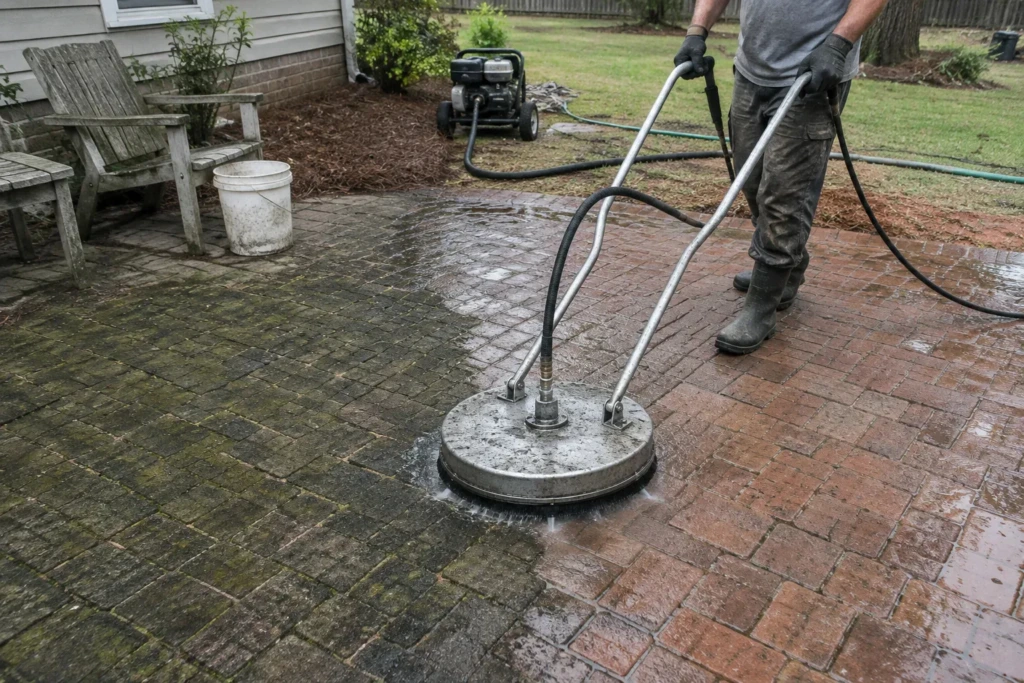
We clean pavers with a rotary surface cleaner so the wand never leaves zebra stripes. Pressure matters: too much blasts the sand out of the joints and etches the paver face, so we work at a controlled setting and let the cleaner do the lifting. Organic growth is treated with a mild cleaning solution and rinsed.
Rust or fertilizer marks need a different approach, using an oxalic or phosphoric acid based remover, never bleach, which can set rust stains.
- Pre-wet nearby plants and use biodegradable surfactants
- Surface cleaner on the field, softer tools along edges and steps
- Rinse thoroughly so no residue is left to dry in the joints
- Runoff is controlled and directed away from storm drains
Step 2: Polymeric Sand in the Joints
Cleaning removes the old joint sand, and weak joints let weeds, ants, and water in. Once the pavers are fully dry, we sweep polymeric sand into the joints, compact it, and clear every grain off the surface before misting. Leftover dust on the paver face hardens into a haze that is hard to remove.
Polymeric sand needs a dry window to cure. Product guidance commonly calls for about 48 hours without rain after activation, so timing matters more than people expect.
Step 3: Sealing, and When Not To
Sealer protects against stains, slows algae, and locks the sand in place. It also changes how the pavers look, so choose deliberately.
Wet-look versus natural finish
- Wet-look (enhancing) sealers darken and deepen color, giving a glossy or satin shine. Great for faded pavers, but the shine shows scuffs and can be slippery when wet.
- Natural-look (penetrating) sealers soak in and leave a matte, nearly untouched appearance. Better for pool decks and steps where traction matters.
- Film-forming versus penetrating is the real difference in durability and maintenance, so ask which product is going down and why.
When you should not seal
Skip sealing when pavers are newly installed and still releasing efflorescence (white mineral bloom). One paver company’s guide advises waiting 6 to 12 months after installation before sealing. Sealing too early traps salts under the coating and clouds the finish.
Also skip it when moisture is trapped beneath the surface from poor drainage, or when the pavers sit in constant deep shade and never fully dry. In those cases, we recommend cleaning and joint sand only.
Cure Times and Rain Windows
Treat the weather forecast as part of the job. Pavers must be completely dry before polymeric sand and again before sealer goes on, which can mean waiting 24 to 48 hours after washing in humid weather. Sealer is typically left alone for at least 24 hours before foot traffic, and vehicles need longer. Always follow the label for the exact product.
Afternoon thunderstorms are common in the Upstate, so we schedule around the forecast and will move a day rather than risk a hazy finish. Keep foot traffic off until the product allows it, and cars off longer.
How Often to Reseal
Plan on resealing every 2 to 4 years, depending on sun, traffic, and the product used. Some manufacturers quote 3 to 5 years. A driveway with daily vehicle traffic wears faster than a back patio.
A simple test: sprinkle water on the pavers. If it beads, the sealer is working. If it soaks in and darkens, it is time to plan a refresh. Cleaning once a year keeps the sealer doing its job longer.
Typical Paver Pricing in Greenville
Paver cleaning and sealing typically runs about $0.30 to $1.00 per square foot for the combined service, while sealing alone is more like $0.50 to $2.50 per square foot depending on the product. Heated power washing can add 10 to 15 percent. These are typical ranges, and your final price comes from a quote after we see the pavers, the joints, and the shade. Our pressure washing cost guide has more context.
- Area. Small patios often hit a minimum charge, which raises the per-foot number.
- Joint condition. Years of moss, weeds, and lost sand mean extra labor.
- Sealer choice. Natural-look penetrating products and glossy film-forming products cost differently.
- Coats. One coat versus two changes both material and time.
- Repairs. Resetting sunken pavers is separate from cleaning.
- Shade and drainage. Damp sites need longer dry times and more scheduling.
What a Paver Quote Should Include
- Cleaning method and pressure, and whether the joint sand is being replaced.
- The polymeric sand type, and who pays for it if joints need more than a refill.
- The sealer brand, finish (wet-look or natural), number of coats, and cure time.
- A test patch on a hidden area before the full seal, if the finish is a concern.
- Whether stain, efflorescence, or oil treatment is included.
- The plan if rain arrives during the cure window.
What to Expect Afterward
- Cleaned, unsealed pavers look much brighter, but not brand new. Older pavers have faded in the sun.
- Wet-look sealer deepens color noticeably. If that is not the look you want, ask for natural-look and a test patch.
- Oil, rust, and efflorescence may lighten but need dedicated products to fully clear.
- Sealed surfaces can look slightly shiny or cloudy for a few days while they cure.
- Algae returns in damp, shaded corners over time. Sealing slows it but does not stop it.
DIY or Hire a Pro?
Washing a small paver patio yourself is possible, but sealing is the step where DIY goes wrong. Too much sealer, uneven coverage, sealing damp pavers, or sealing too soon leaves cloudy, sticky, or peeling surfaces that are expensive to strip. Polymeric sand haze is another common DIY mistake.
- DIY can work for a light wash with a hose, brush, and gentle cleaner on a small patio.
- Hire a pro for sealing, large areas, driveways, joint replacement, and any paver surface with efflorescence or oil.
- If a sealing job goes wrong, stripping it often costs more than doing it right the first time.
Questions to Ask Any Paver Company
- What pressure do you use, and will you replace the joint sand?
- What sealer will you use, and is it wet-look or natural-look?
- How long should I wait before sealing new pavers?
- What happens if it rains after sealing?
- Can you show proof of insurance?
- What is your plan if the sealer turns cloudy?
Red Flags to Watch For
- A company that wants to seal brand-new pavers without discussing efflorescence.
- Sealing damp pavers or sealing right after rain.
- A price that does not name the sealer or the number of coats.
- No mention of replacing joint sand after a wash.
- Heavy pressure used on joints and edges.
- A guarantee promise that is not written down.
What to Do Before We Arrive
- Move furniture, planters, and grills off the surface
- Tell us about any known rust, oil, or fertilizer stains
- Point out loose or sunken pavers, since repairs come before sealing
- Note any pet areas or sprinklers we should work around
Paver patios often sit next to other surfaces that need attention. This is often paired with driveway cleaning or deck and patio cleaning in the same visit.
Common Paver Problems We See
- Green and black algae in shaded corners and along north-facing walls
- White haze (efflorescence) on newer installs, which is mineral salt rising to the surface and needs a dedicated cleaner
- Oil and grease on driveway pavers, which may need a degreaser and a poultice before general cleaning
- Rust spots from metal furniture or irrigation water, treated with an oxalic or phosphoric based remover
- Weeds and moss in joints where sand has washed out
- Sunken or loose pavers, which should be reset before any sealing
We also look at slope and drainage, since water pooling on a patio will keep stains coming back no matter how well it is sealed.
Pool Decks, Walkways, and Driveways
Where the pavers are changes the plan. Pool decks favor a natural-look sealer for traction. Front walkways take foot traffic and benefit from a stain-resistant coat. Driveways take tires, drips, and heat, so durable products and more frequent resealing make sense.
If the driveway is plain concrete rather than pavers, that is a different process. For the full list of residential services, see our pressure washing services overview. We work in places like Verdae and Five Forks as well as across the Upstate.
Poured concrete walkways and patios are a different job from pavers; see concrete cleaning for that.
Call (864) 477-1558 or request a free quote and we will get back to you with a clear written price.
Why This Matters Here
Pavers hold moisture in their joints, and shady Upstate patios stay damp long enough for algae to return quickly. Sealing and polymeric sand are most effective when they go on during a dry stretch, so scheduling around Greenville afternoon storms matters.
Most homes do well with a cleaning once a year, and shaded patios under trees may want it twice. Annual cleaning keeps algae from setting deep into the pores and extends the life of any sealer. If green or black growth returns within a few months, that is a sign of persistent moisture.
No. Sealing is optional and not always wise. New pavers still releasing efflorescence, or pavers with trapped moisture beneath, can cloud under sealer. Sealing helps most on cleaned, dry, stable pavers where you want stain resistance and locked-in joint sand. We will tell you if your surface should skip it.
Wet-look sealers enhance color and add a satin or glossy shine, but can be slick when wet. Natural-look sealers penetrate and leave a matte, untouched appearance with better traction. Wet-look suits faded driveways, while natural-look is usually preferred around pools and steps.
Foot traffic is usually fine after several hours to a day, and vehicles need longer, often 24 to 72 hours depending on the product and weather. Always follow the label for the sealer used. Humidity and cool shade can stretch cure times, so we give you a specific window.
No. We need access to the areas being cleaned and an outside water spigot. Move cars, grills and planters off the work area and close windows before we arrive. If you are home we walk the result with you at the end; if not, we can send photos when the job is done.
We use your outside spigot for most residential work and do not need electricity. For roofs and siding the soft wash rig carries its own tank where that helps. If your home is on a well or has low water pressure, mention it when you request a quote so we can plan around it.
Get a Free Quote
Serving Greenville, SC and the Upstate. Call (864) 477-1558 or request a quote online. We reply quickly to every request.