
Pressure Washing in Downtown Greenville, SC
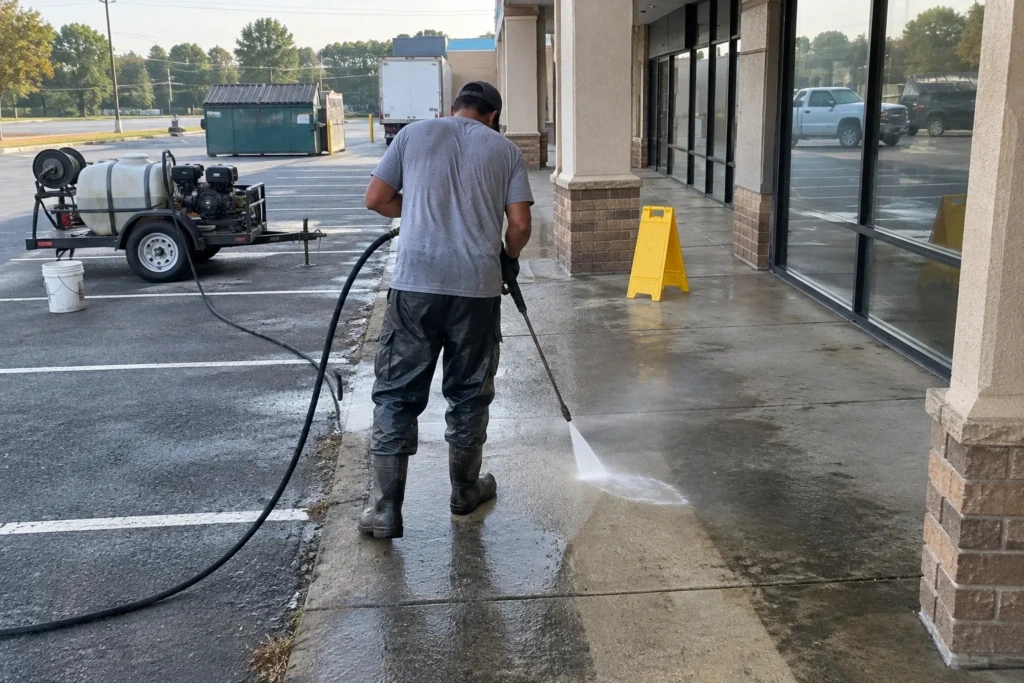
Pressure washing downtown Greenville SC is mostly about sidewalks, patio dining areas, storefront entries and condo exteriors, and the right method depends on the surface under your feet. Brick, stone, pavers and aggregate each need a different pressure and cleaner. We quote by surface and access, work early to stay ahead of foot traffic, and get approvals sorted before we arrive.
Why Main Street Gets Dirty So Fast
Wide sidewalks, tree beds and cafe seating are great for walking, but they also mean leaf drop, sap, spilled drinks and grease on the same ground that thousands of shoes cross.
The Reedy River adds humidity, which keeps shaded north-facing brick and stone steps damp. That is the recipe for green film and mildew that shows up on entries first.
What to Wash First on a Storefront
If your budget is limited, start where customers look and walk. This order gives the biggest visible change per dollar:
- Entry sidewalk and threshold, because grime here is seen before anything else
- Patio dining area, where grease and food residue create slick spots
- Entry steps and the lower 4 to 5 feet of facade, where splash and algae collect
- Awnings, glass and frames
- Dumpster pad and service alley, which can be done on a slower schedule
Our commercial building washing and wider commercial pressure washing pages explain how larger jobs are scoped.
Brick, Stone and Pavers Need Different Handling
Downtown has everything from brick facades to cobblestone streets in the West End Historic District to stone steps and decorative pavers in plazas. High pressure can etch soft brick, open up old mortar joints and blow sand out of paver joints. We use low pressure and a surface cleaner where flat, pre-wet brick, and rinse thoroughly.
If mortar is crumbling or brick is spalling, cleaning will not fix it and aggressive washing can make it worse. In that case a mason should look first. For pavers, cleaning is followed by re-sanding the joints once dry and sealing after the sand cures, with resealing every 2 to 4 years. Typical paver cleaning and sealing runs $0.30 to $1.00 per square foot, and details are on our paver cleaning and sealing page.
Condos and Association Approval
Many downtown residential buildings are association managed. Balcony, facade and common-area washing at buildings like these normally needs board or manager sign-off, and a request should name the areas, the method and the date.
Balconies and rooftop terraces need extra planning: drains are protected, water is contained, and residents below are told in advance. Our apartment and HOA pressure washing page covers how we handle multi-unit work.
Questions to Ask Any Company Before Booking
- Will you collect or contain wash water so detergent does not reach storm drains?
- Who is the contact if something is missed, and what is the arrival window?
- Is the quote itemized by surface, or one lump number?
- What happens to planters, awnings and glass nearby?
- Can you work before opening hours?
Common problems downtown about the industry are no-shows, vague pricing, streaky sidewalks left behind by a rotating tip, and plants burned by chemicals. Asking the questions above up front prevents most of them. Greenville County treats detergent wash water in storm drains as illicit discharge, so runoff control is a requirement, not an extra.
Seasonal Calendar for a Downtown Business
- Spring: pollen and tree drop. Wash after the heavy pollen window, not before.
- Summer: patio use peaks, so grease and gum removal pays off most.
- Fall: leaves and sap stain walks and pavers. Clear tree wells first.
- Winter: best time for deeper cleaning and sealing on dry days above freezing.
Residential Work Near Downtown
If you live in an older home near the core, you probably have brick, slate or aged wood that calls for soft washing. See house washing and our guide to soft washing versus pressure washing. For pricing context, our pricing guide lists typical Greenville ranges. Commercial flatwork generally runs 0.10 to 0.40 per square foot, with the final number coming from a quote.
Nearby Areas
Just north of the core, North Main has older, shaded homes. South of downtown, Augusta Road is a long residential corridor of mid-century houses. Crews already working downtown can usually reach both on the same visit schedule.
Not sure how often to schedule? Our guide on how often to pressure wash gives a starting point, and downtown storefronts often do sidewalks more often than facades.
Sidewalk Cleaning Details That Save Money
Sidewalks are the cheapest high-impact job downtown, but they go wrong when a crew uses a bare wand and leaves tiger stripes. A rotary surface cleaner covers the ground evenly and splashes less. Before it starts, furniture, bike racks and planters are moved or worked around, and storm drain inlets are protected.
Gum is removed with heat and a scraper rather than by blasting it, which can pit concrete. Expect a quote based on square footage, with a minimum for small jobs. Because a clean sidewalk beside a dirty one looks worse, neighboring tenants often split a visit so the whole block face matches.
What a Good Scope Document Looks Like
- Addresses and exact surfaces, with approximate square footage
- Method for each surface (surface cleaner, soft wash, hand rinse)
- Water handling plan and who protects drains
- Start time, expected finish and any closures needed
- Contact name for the day of work
A scope like this makes it easy for a landlord or board to say yes quickly, and it gives you something to compare against the invoice. If a company will not put it in writing, keep looking.
Ready for a quote? Call (864) 477-1558 or request a free quote and we will walk through the job with you.
Nearby: our Augusta Road pressure washing page covers the older shaded streets just south of downtown.
Why Pressure Washing in Downtown Greenville, SC Is Different
Downtown surfaces take constant foot traffic, patio dining grease and leaf drop from street trees, and most buildings answer to a landlord, condo board or property manager. Approval and method come before the first spray.
If your building has an association, usually yes for balconies, facades and common areas. Your own unit patio may be simpler, but check your governing documents. Send us the building name and areas, and we will give your manager a scope, method and date to approve before work starts.
Yes. Grease and gum respond best to a degreaser and hot water with a surface cleaner, followed by a thorough rinse. Heated service costs roughly 10 to 15 percent more than cold water. Runoff is controlled so detergent does not enter storm drains, which matters on busy blocks near Main Street.
It can be, if the method is gentle. Old brick and soft mortar can be damaged by high pressure, so low pressure, pre-wetting and a careful rinse are used. If mortar is crumbling or brick is flaking, have a mason inspect it before any washing.
Early mornings and off hours are the usual choice, before foot traffic and patio service pick up. Evening or weekend slots can work when a business needs them. Tell us your opening hours and any events, and we will schedule around them where possible.
No. We need access to the areas being cleaned and an outside water spigot. Move cars, grills and planters off the work area and close windows before we arrive. If you are home we walk the result with you at the end; if not, we can send photos when the job is done.
We use your outside spigot for most residential work and do not need electricity. For roofs and siding the soft wash rig carries its own tank where that helps. If your home is on a well or has low water pressure, mention it when you request a quote so we can plan around it.
Get a Free Quote
Call (864) 477-1558 or request a quote online. We reply quickly to every request.