Commercial Pressure Washing in Greenville, SC
Commercial pressure washing in Greenville, SC usually costs about $0.10 to $0.40 per square foot for flatwork such as sidewalks, parking areas and drive-throughs, priced from a written walk-through proposal. Building facades are priced by surface, height and condition. We schedule around your business hours and plan wash water control before the first hose is unrolled. Below is how the work, the schedule and the bid process should go, so you can compare any vendor fairly.
Commercial Services We Provide
- Storefront and building exterior washing
- Parking lots, sidewalks and drive-throughs
- Dumpster pads and trash enclosures
- Apartment, condo and HOA common areas
- Entrances, canopies and loading docks
- Gum removal and graffiti cleanup (surface dependent)
- Recurring maintenance programs
How Often Does a Commercial Property Need Washing?
Most commercial properties land on two to four visits a year, but the right number depends on the surface, not the building. Industry maintenance guides generally put busy entrances at every one to three months, parking areas quarterly to twice a year, and facades once or twice a year. Use this as a starting point, then adjust for shade, tree cover and foot traffic.
- Entrances and sidewalks: every 1 to 3 months, more often under trees or in constant shade
- Dumpster pads, food service tenants: monthly, because grease and odor return fast
- Dumpster pads, office and retail: quarterly is usually enough
- Drive-through lanes: monthly to every 6 weeks where oil and food residue build up
- Parking lots: quarterly to twice a year, with spot cleaning for oil
- Loading docks: 2 to 4 times a year
- Building facades: once or twice a year, timed after pollen season
In the Upstate, humidity grows algae on shaded walks and north walls all summer, spring pollen coats every flat surface, and fall leaves leave tannin stains on concrete. Our guide to red clay staining on concrete explains the orange film you see near construction and bare soil.
Why Clean Walkways Are a Safety and ADA Issue
Algae and mildew make concrete slick when wet. Accessible routes under the ADA must be stable, firm and slip resistant, and the standards do not set a single friction number, so the practical answer is to keep surfaces free of slime, oil and debris. A walkway that is green on a rainy day is a liability for your customers, your tenants and you.
Washing is maintenance, not a legal fix. If a ramp or stair is worn smooth, cracked or missing proper texture, cleaning will not cure that, and you should talk to a contractor or your accessibility consultant. We will tell you when a surface needs repair or a coating instead of another wash.
Dumpster Pads, Gum and Graffiti
Dumpster pads are where tenants complain first. Hot water and degreaser break down grease and food residue, and the wash water must be handled correctly (see the next section). Heated service typically adds 10 to 15 percent.
Gum on retail walks comes off with heat and a scraper pass followed by a surface cleaner. Graffiti depends on the surface: painted walls often need a remover that can change the paint, and porous brick or stucco can hold ghosting after cleaning. We test a small area first and tell you what to expect before approving the work.
Wash Water, Storm Drains and Greenville County Rules
Greenville County runs a stormwater program that looks for illicit discharges, and its Storm Water Management Ordinance allows civil penalties. Detergent, grease and chemical wash water belong in the sanitary sewer or a proper collection point, not a catch basin. Plain water rinsing of a clean surface is a different case from soapy water carrying oil.
On commercial sites we plan this first: locate every inlet, cover or berm drains, control the low point of the work area and keep soap off landscaping. Where grease or detergent load is high (dumpster pads, drive-throughs), the proposal spells out how wash water will be collected and where it goes. Ask any vendor to put this in writing. If your property has a stormwater pond or sits near a creek, tell us at the walk-through. Rules can differ by city and by site permit, so we confirm the local requirement for your address rather than assuming.
Commercial Building and Multifamily Work
Retail, office and medical buildings each need a different method. Read how we handle commercial building washing, including soft washing for painted and stucco walls and surface cleaners for concrete. Communities with residents on site have a different problem set, covered in apartment and HOA pressure washing: phased scheduling, notice to residents and photo documentation for boards.
Scheduling Off Hours
Most businesses cannot close for a wash. Restaurants usually want work after close, offices often prefer weekends or early mornings, and medical practices need entrances kept open for patients. We pick a window per area at the walk-through, confirm it in writing and tell you before any weather reschedule. Hoses run along edges, not across doors, and wet walks are cleared or marked before opening.
Typical Pricing and What Moves It
Flatwork typically runs about $0.10 to $0.40 per square foot. Large lots usually get a lower rate, heavy oil, gum or years of buildup raise it, and heated service adds roughly 10 to 15 percent. A 5,000 square foot lot at those rates falls roughly between $500 and $2,000 for a single visit, and recurring plans are usually priced lower per visit than a one-time deep clean. Those are examples of how the math works, not a quote. Our pressure washing cost guide shows how residential and commercial rates compare.
- Total square footage and number of stories
- Surface: concrete, brick, stucco, EIFS, metal or glass
- Condition: light pollen versus oil, gum and years of algae
- Access: lifts, tight alleys, limited water sources
- Time window: nights and weekends can change scheduling cost
- Containment and collection needs near drains or ponds
Recurring Plans
Buildup returns, so a schedule beats emergency cleanings. A plan commonly looks like monthly entrances and dumpster pads, quarterly walks and drive-throughs, and an annual facade wash. Recurring pricing is set per visit or per month in the same written proposal, with a seasonal calendar so you can budget the year. Light buildup costs less to remove than deep staining, and it spares the concrete from repeated aggressive cleaning.
How to Run a Fair Bid: What to Put in Your RFP
Whether you send us a request or ten other vendors, ask every bidder for the same things so prices can be compared.
- Site walk before pricing, with measured square footage per area
- Method and pressure for each surface (soft wash on painted walls, surface cleaner on concrete)
- Written wash water plan: drains, collection, disposal point
- Service windows, crew contact on site, and a weather reschedule policy
- Itemized price per area and per visit, with exclusions listed (windows, sealing, rust, graffiti)
- Recurring plan pricing and cancellation terms
- A certificate of insurance requested in writing, sent directly from the insurer, before work starts
- Before and after photos by area
About insurance: we are still building out our business documentation and do not publish insurance claims on this site. We would rather say that plainly than imply coverage. Whatever vendor you choose, you should receive a certificate naming your property or company before anyone starts, and you should call the insurer to confirm it. A vendor who cannot produce one should not touch a tenant property. Ask us what documents we can provide for your file when you request a quote, and compare bids only among vendors that meet your requirements.
Mistakes to Avoid When Hiring
- Accepting a lump sum with no area breakdown, which invites surprise add-ons
- High pressure on stucco, painted block or soft brick that strips the surface
- No plan for storm drains, which can cost you a complaint or a citation
- Skipping tenant or customer notice, which creates complaints and moved cars
- Ignoring chemistry near plants, vents and air intakes
- One cheap wash with no plan for when the algae returns
Soft washing and high pressure each have a place. Our explainer on soft washing vs pressure washing shows which surface gets which method.
Who We Work With
- Retail centers, restaurants and storefronts
- Office parks and professional buildings
- Medical and dental practices
- Apartment communities and condo associations
- HOAs with amenities, entrances and common walkways
- Property managers handling several sites
We serve properties across the Upstate, from downtown Greenville to Greer and Simpsonville. Homeowners can browse our residential pressure washing services, and everyone can see the full list of service areas.
How to Get Started
- Call or request a quote and tell us about the property
- We schedule a walk-through and take measurements
- You receive a written proposal with scope, schedule and price
- We confirm off-hours timing and any tenant or resident notice
- Work is completed, with photos on request
Call (864) 477-1558 or request a free quote and we will walk the property with you.
Flatwork typically runs about $0.10 to $0.40 per square foot, with heated service adding roughly 10 to 15 percent. Building washes are priced by surface, height and condition. Prices here are typical ranges, not quotes. Call (864) 477-1558 for a written proposal after a walk-through.
Most properties need two to four visits a year. Entrances and walks often need cleaning every one to three months, dumpster pads monthly if food is involved, parking quarterly to twice a year, and facades once or twice a year. Shade and tree cover can shorten those intervals.
Yes. Early mornings, evenings and weekends are common for commercial jobs so customers and tenants are not disrupted. We choose a quiet window for each area at the walk-through and confirm the schedule in writing, including how we will notify you about a weather delay.
Greenville County treats detergent and grease wash water entering storm drains as an illicit discharge, with civil penalties possible. We locate inlets, block or berm them, control runoff and plan collection where the site requires it. The proposal states the plan, and local rules for your address are confirmed first.
We use your outside spigot for most residential work and do not need electricity. For roofs and siding the soft wash rig carries its own tank where that helps. If your home is on a well or has low water pressure, mention it when you request a quote so we can plan around it.
You receive a written, itemized quote before any work is scheduled, and you pay when the job is finished and you have looked it over. Nothing is added on site without your approval. Ask about accepted payment methods when you book.
Commercial Building Washing
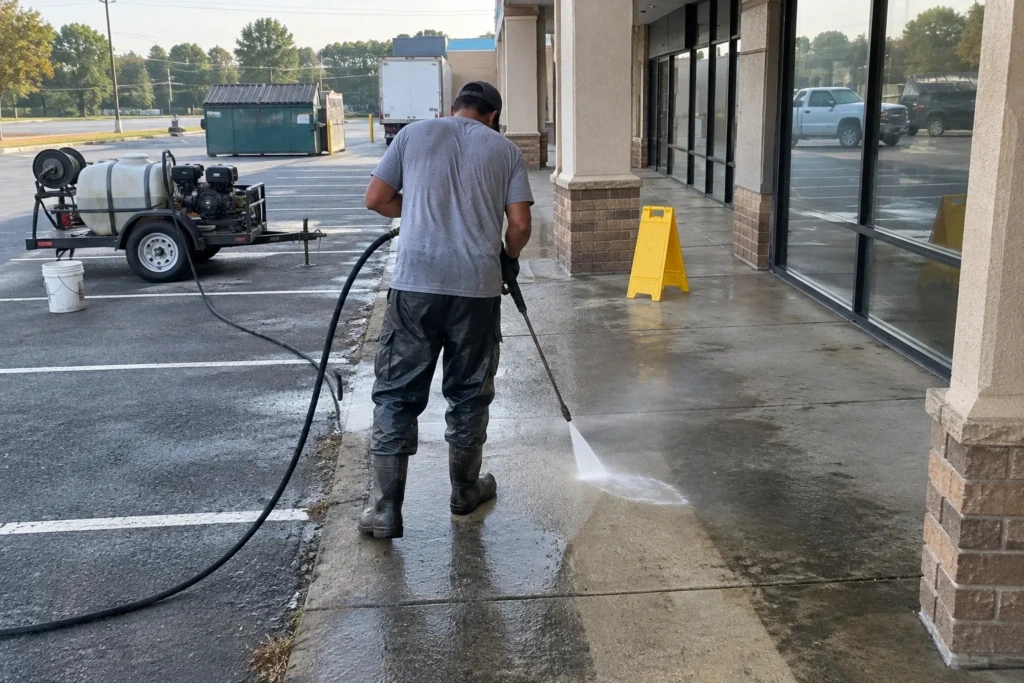
Commercial building washing in Greenville, SC keeps storefronts, offices and medical buildings clean without disrupting business.…
Apartment & HOA Pressure Washing
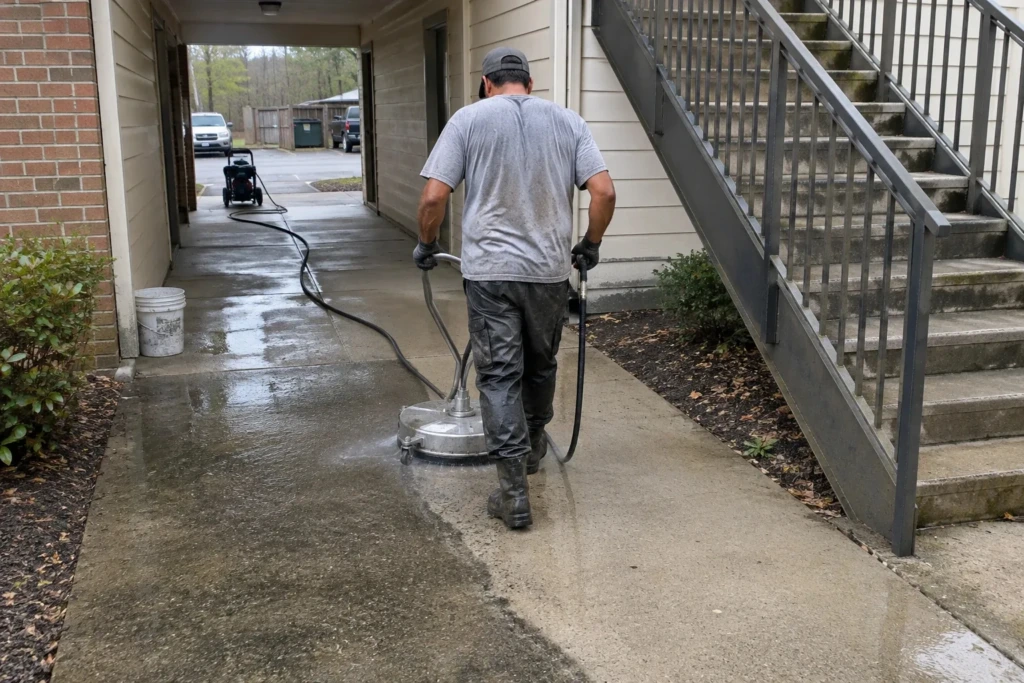
Apartment complex pressure washing in Greenville, SC works best when it is planned like a project:…