
Pressure Washing in Greer, SC
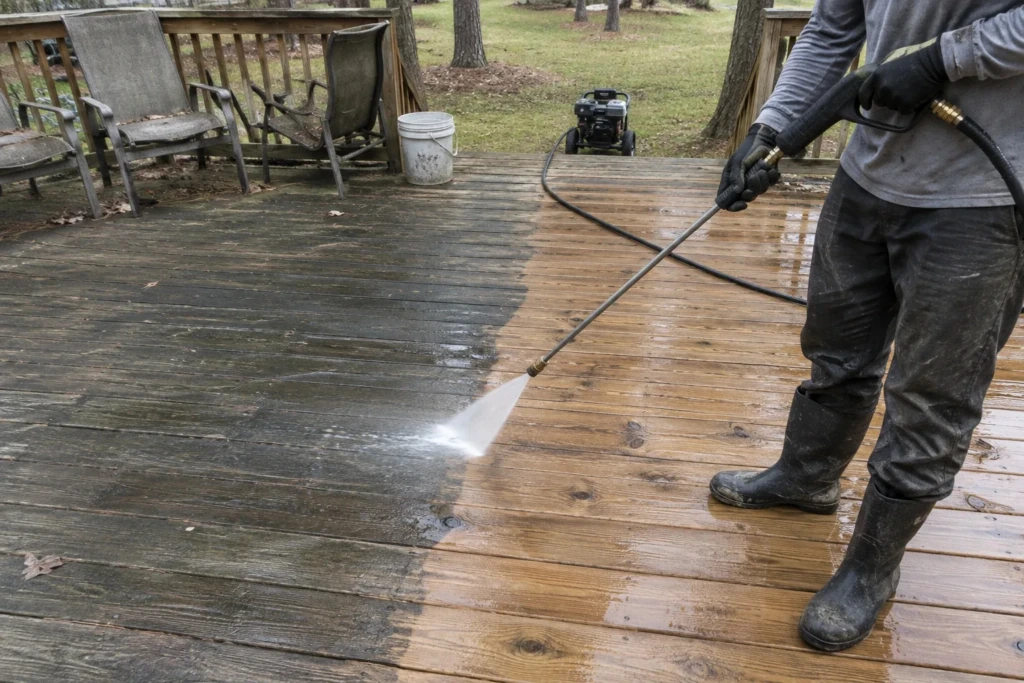
Patio cleaning in Greer, SC starts with knowing what your patio is made of and how much shade it gets. Greer sits 12 miles northeast of Greenville and spans Greenville and Spartanburg counties, so homes range from early railroad-town streets to newer subdivisions. A shaded concrete patio needs algae treatment and a flat surface cleaner, while pavers need gentler work and a plan for joint sand. Here is how we handle patios, plus the rest of the exterior.
Patio Cleaning in Greer: By Material
- Poured concrete: surface cleaner at about 3,000 to 4,000 PSI after an algae treatment; no wand striping.
- Stamped concrete: lower pressure so the pattern and color stay intact; sealing, if present, may need reapplying afterward.
- Pavers: clean, let dry, re-sand with polymeric sand, and seal only if you want color or stain protection.
- Wood or composite deck: wood at about 500 to 1,200 PSI with the grain; composite per maker guidance.
See deck and patio cleaning and paver cleaning and sealing. Resealing pavers is typically every 2 to 4 years. Patio color that does not return after washing may be a stain, such as rust or clay, and not algae.
Railroad Town Roots, Newer Neighborhoods
Greer began around a railroad station in 1873 and was incorporated in 1876. Four cotton mills were operating by 1908, and BMW opened its plant in 1994, which brought rapid growth in the 1990s. So Greer has older masonry near Greer Station and many subdivisions from the following decades.
Older painted wood and brick call for low pressure and a test spot. Vinyl and fiber cement on newer homes are soft washed, see house washing and soft washing vs pressure washing.
Shade is the biggest variable. A patio under an oak can look dark green within a season, while the same slab in full sun stays clean for years. Hose it first on a dry day and see if the color lightens: if it does, algae is the cause and washing will fix it. If the stain stays, it may be rust, clay, grease from a grill, or paint, and each needs a different product. We identify the stain before we choose the method.
Furniture and grills are the most common sources of marks. Grill grease needs a degreaser and some dwell time, and rust from metal chair feet needs an acid-based remover, never bleach.
Check HOA Rules Before Booking
Many newer Greer subdivisions have HOAs, and covenants often cover exterior appearance, so check yours. Cleaning rarely needs approval, but sealers, stains, or color changes might. Neighborhood associations and apartment managers can also use HOA and apartment pressure washing for common areas.
Greer sits partly in Greenville County and partly in Spartanburg County, so if your address is near the line, mention it when you call; wash water rules and storm drain practices are the same, but it helps us schedule. Newer subdivisions often have big concrete aprons, so ask us to include the patio, sidewalk, and driveway in a single flatwork price rather than buying each piece alone.
Driveways, Roofs, and Gutters
Red clay and tire marks show up fast on driveways. A surface cleaner gives an even finish and a typical driveway is about $150 to $650, see driveway cleaning and oil stain removal. Roof streaks are Gloeocapsa magma algae, soft washed at very low pressure, see roof soft washing. Gutters under mature trees usually need cleaning twice a year, see how much gutter cleaning costs.
A Greer Seasonal Calendar
- March to May: pollen season; wash patios and decks after it drops.
- Summer: humidity drives algae; good time for siding and roofs.
- Fall: clear gutters after leaf drop.
- Winter: mild days work for flatwork, but avoid washing when freezing is forecast.
Choosing a Company: Avoiding Common Complaints
- Streaky patios: ask if a surface cleaner is used.
- Damaged siding: ask for the PSI on vinyl, and make sure nobody sprays upward under laps.
- Killed plants: ask how shrubs are wetted and rinsed.
- Surprise pricing: get an itemized written quote, see the cost guide.
- No-shows: ask for a date window and a phone number.
Protecting Your Landscaping and Lake or Pool Areas
Many Greer yards have mulch beds, azaleas, and boxwoods right against the patio edge. We wet them first, keep strong cleaner off leaves, and rinse after. Rainwater helps too, so we avoid working right before a hard freeze. If your patio sits near a pool, pond, or lake, ask where the runoff goes. Detergent should not reach open water, and good crews use lower-impact cleaners and capture or divert flow when needed.
When Not to Pressure Wash
Skip high pressure on soft or peeling wood, crumbling mortar, and stamped concrete with worn sealer. A roof with lifting or missing shingles needs a roofer. If sprinkler rust is the issue, an acid remover works, not bleach.
What to Expect on Cleaning Day
We walk the property with you, point out cracks, loose pavers, and stains, and agree on the order. Plants near the work area are wetted first. Flatwork is cleaned in overlapping passes, edges and steps are detailed by hand, and everything is rinsed so no film remains. Afterward we check for missed corners in good light, since shade hides streaks.
Wet concrete looks darker than dry, so judge the result after it dries. If a stain remains, we say whether a second treatment is worth it or whether the stain is in the concrete itself and not on top of it.
Furniture goes back after the surface is dry, usually within hours. For sealed pavers, wait for the sealer to cure per the label before using the patio.
Commercial and Nearby
Greer storefronts and shopping centers get the same cleaning as residential flatwork, scheduled after hours. See commercial pressure washing. Greer is also close to Taylors and Wade Hampton along US 29, so nearby jobs are easy to group. Our guide on how often to wash your house helps you plan.
Ready for a quote? Call (864) 477-1558 or request a free quote and tell us what you want cleaned, and we will give you a clear price in writing before work starts.
Why Pressure Washing in Greer, SC Is Different
Greer grew from an 1873 railroad station into a mill town, then expanded after BMW arrived in 1994. Older masonry near the center and many newer HOA subdivisions mean patios and exteriors need different methods.
Most patios are bundled with a driveway or house wash. A typical Greenville-area driveway runs about $150 to $650, and a patio is usually a smaller add-on priced by square footage. Pavers cost more when re-sanding and sealing are added, at roughly 0.30 to 1.00 per square foot. Your quote sets the final price.
Not always. Sealing helps pavers hold color and resist stains and weeds, but concrete in good shape may not need it. Pavers are typically resealed every 2 to 4 years. Sealer needs dry joints and time to cure before furniture goes back, so ask for the maker's times.
It can if pressure is too high or a dull nozzle is held close. We use lower pressure and a surface cleaner, and we test a corner first. If the old sealer is worn or peeling, we tell you before starting, since it may need reapplying afterward.
Usually not for plain cleaning, but check your covenants because rules vary by community. Sealers, stains, and color changes on visible surfaces are the items most likely to need approval. Your HOA or property manager can confirm in a quick call.
Most residential visits take one to four hours depending on the surfaces and how stained they are. A driveway alone is usually one to two hours, a house wash two to four, and a roof two to five. We give you a time window with the quote.
No. We need access to the areas being cleaned and an outside water spigot. Move cars, grills and planters off the work area and close windows before we arrive. If you are home we walk the result with you at the end; if not, we can send photos when the job is done.
Get a Free Quote
Call (864) 477-1558 or request a quote online. We reply quickly to every request.