
Pressure Washing in North Main, Greenville, SC
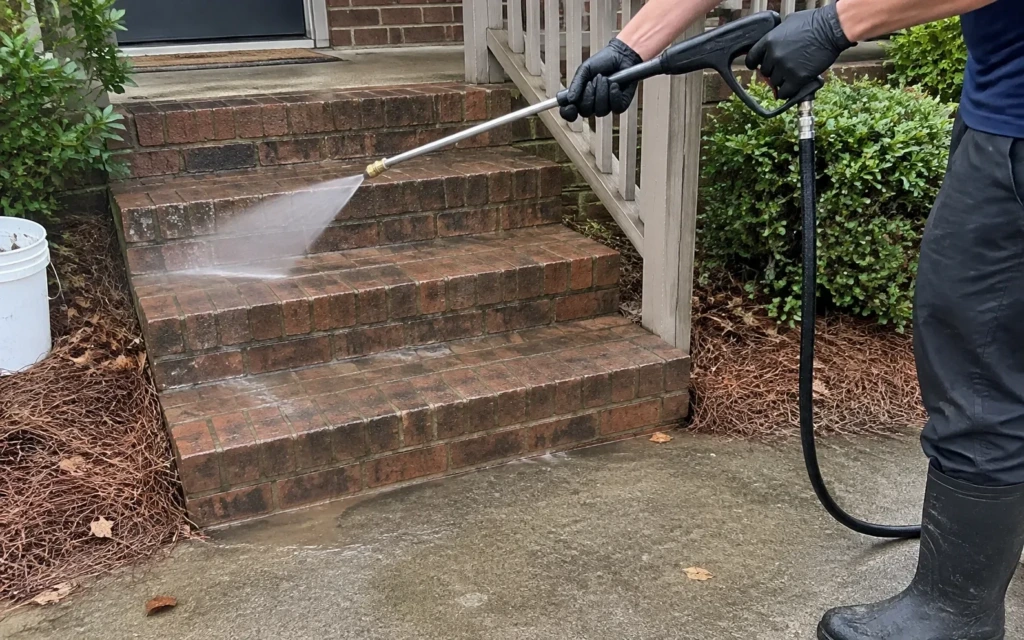
Pressure washing in North Main, Greenville works best as soft washing: low pressure, the right cleaner and a long rinse. North Main is a walkable neighborhood just north of downtown, described as one of the city’s oldest, with homes built mostly in the early to mid 20th century under big oaks. Shade keeps surfaces damp, so algae, mildew and green film come back faster here than on open, sunny lots. A typical house wash runs about $250 to $1,000+ depending on size and stories, and we quote after seeing the home.
What North Main Looks Like
The neighborhood sits south of North Pleasantburg Drive, north of Stone Avenue, east of Mohawk Drive and Chick Springs Road, and west of Worley Road and Rutherford Road. The area was founded in 1813 as a business district for Greenville, and residential building followed until the Great Depression slowed growth. In recent years it has been revived, with restored older homes sitting beside newer single-family construction.
Livability describes the housing as Craftsman, traditional and bungalow designs in brick, wood siding and stone, mostly single-family, with sidewalks and mature trees. Stone Avenue is the local commercial spine, and Cleveland Park, Falls Park on the Reedy and the Swamp Rabbit Trail are within walking or biking distance. Those are the surroundings your exterior lives in: leaf drop, pollen and humidity all come with the trees.
Match the Method to the Material
- Painted wood siding and trim: low pressure, spray angled downward, never up under laps. Peeling paint may lift during cleaning, so a painter may be needed afterward.
- Brick and stone: pre-wet, gentle cleaner, soft rinse. White powder (efflorescence) and rust need different products than algae. Skip washing where mortar is sandy or crumbling and call a mason.
- Shingle roofs: soft wash under about 100 PSI to kill the algae that cause black streaks, then a low-pressure rinse. See roof soft washing and the moss and algae removal guide.
- Concrete walks, steps and driveways: a surface cleaner prevents zebra stripes. See driveway cleaning.
- Porches and decks: wood is cleaned with the grain at roughly 500 to 1,200 PSI, then brightened. Deck and patio work follows the same low-pressure logic.
For the whole-house picture, start with house washing, and read soft washing versus pressure washing to see why older exteriors lean toward the gentler method.
Problems Typical for Bungalow-Era Exteriors
Older wood and brick fail in predictable ways, and washing can make them visible. Knowing them helps you decide what to fix first.
- Soft or rotted trim: water pressure can punch through it. Replace first, clean after.
- Failing window glazing and caulk: water can get behind it and into walls.
- Old paint: homes from this era may carry lead paint. Do not dry scrape or sand it yourself, and ask a lead-safe pro if paint is flaking.
- Old mortar and porch footings: aggressive spraying can wash out soft joints.
- End-of-life roofs: curling or granule-shedding shingles need a roofer’s opinion before any wash.
When Not to Pressure Wash
Skip high pressure on any home in this age range. Do not wash if you can see active leaks, if exterior wood is soft when you press a screwdriver into it, if paint is peeling in sheets, or if the roof is clearly failing. In those cases get a repair estimate first. If your property sits inside a City of Greenville historic district, which the city lists for areas such as Hampton-Pinckney and Pettigru, check with the city before changing materials. Cleaning is maintenance, but ask if you are unsure.
Shade, Gutters and Leaf Load
Hardwood canopy fills gutters fast. Overflow streaks siding and keeps fascia wet, which speeds rot on older trim. Under heavy cover, twice a year is a sensible rhythm: once after spring tree drop and once after leaves fall. Our gutter cleaning service pairs well with a wash, and what gutter cleaning costs explains the typical $100 to $300 per home.
Pollen and tannin from leaves also darken walks and steps. Red clay in Piedmont soil makes it worse, which is covered in why red clay stains concrete faster. Oil drips from a street-parked car are a separate fix: see how to remove oil stains from a driveway.
Wash Water and Storm Drains
Storm drains in Greenville lead to creeks and rivers, not a treatment plant. Greenville County operates under a federal stormwater permit, and wash water that carries detergent, oil or sediment should not be sent down a street drain. A careful crew blocks or covers nearby inlets, keeps runoff on lawn or landscape where that is appropriate, and rinses plants before and after cleaner. Ask any company how they handle runoff. If the answer is a shrug, keep looking.
Questions to Ask Before You Hire
- What pressure do you use on siding? Under about 500 PSI is standard for soft washing.
- Do you use a surface cleaner on flat concrete, so there are no stripes?
- How do you protect and rinse shrubs and gardens?
- Is the quote in writing and itemized by surface?
- What is the arrival window and the reschedule plan?
- How will you handle runoff near storm drains?
Our pricing guide shows typical ranges so a quote does not surprise you.
A Simple Plan for an Older, Shaded House
Year one: soft wash siding, treat the roof if streaking shows, and clear gutters. Each spring: clean gutters after tree drop and spot-treat green film on steps and walks. Every two to three years: a full house wash, or sooner on north-facing walls. Any time: tell the crew about peeling paint, cracked glazing or soft wood before they start. A good company walks the exterior with you first and points out places where washing could make an existing problem visible, such as a hidden leak or an old repair. That conversation is also the best test of whether a company knows older homes.
Many North Main homes are on walkable lots close to neighbors, so ask about overspray on cars, fences and shared driveways. Close windows, move cars and pull pet toys off porches before the crew arrives.
How Often Under Trees
A shaded house may need a soft wash every year instead of every one to two. North-facing walls and roof edges go green first. The cleaning frequency guide breaks the timing down. Trimming limbs back from the roof lets sun and air dry surfaces, and a tree service should do that, not a pressure washer. Zinc or copper strips near a roof ridge can slow algae, and a roofer installs them.
Shops, Offices and Multi-Unit Buildings
Stone Avenue and the corridors around the neighborhood mix homes with small businesses. Storefront sidewalks, entries and dumpster pads are handled under commercial pressure washing, and shared walkways at multi-unit buildings under apartment and HOA pressure washing. We did not verify the exact mix of condos or HOAs inside North Main, so ask us to price your actual property.
Nearby Areas We Serve
North Main touches downtown Greenville. South of downtown, Augusta Road has a similar mix of older homes and mature trees. Follow the Swamp Rabbit Trail extension out from Cleveland Park and you reach Verdae, where housing is mostly newer.
Ready for a quote? Call (864) 477-1558 or request a free quote and we will walk through the job with you.
Nearby: our Augusta Road pressure washing page covers the older shaded streets just south of downtown.
Why Pressure Washing in North Main, Greenville, SC Is Different
North Main is described as one of Greenville's oldest neighborhoods, with early to mid 20th century homes in brick, wood and stone under mature oaks. Shade keeps surfaces damp, so older materials need a gentle method and gutters need regular attention.
No, when done correctly. Soft washing uses very low pressure, under about 100 PSI, with a cleaner that kills algae and a gentle rinse. High pressure is what strips granules. If shingles are curling, cracking or losing granules already, have a roofer assess them before any wash.
Mature tree cover keeps walls and roofs shaded, so moisture lingers after rain. Algae, mildew and green film thrive in that dampness, and leaves add tannin stains. North-facing and heavily shaded sides usually show growth first, then roofs and walks follow.
Usually, if pressure stays low and the wood is sound. Spray goes downward, and soft or rotted boards are left alone. Peeling paint can come off, so plan on touch-up painting. Homes from this era may have lead paint, so ask a lead-safe professional if paint is flaking.
Most Greenville-area house washes run about $250 to $1,000+ depending on square footage, stories and how heavy the growth is. Two-story homes with steep roofs cost more. A written quote after seeing the home gives the real number, not a phone guess.
No. We need access to the areas being cleaned and an outside water spigot. Move cars, grills and planters off the work area and close windows before we arrive. If you are home we walk the result with you at the end; if not, we can send photos when the job is done.
We use your outside spigot for most residential work and do not need electricity. For roofs and siding the soft wash rig carries its own tank where that helps. If your home is on a well or has low water pressure, mention it when you request a quote so we can plan around it.
Get a Free Quote
Call (864) 477-1558 or request a quote online. We reply quickly to every request.