
Pressure Washing in Augusta Road, Greenville, SC
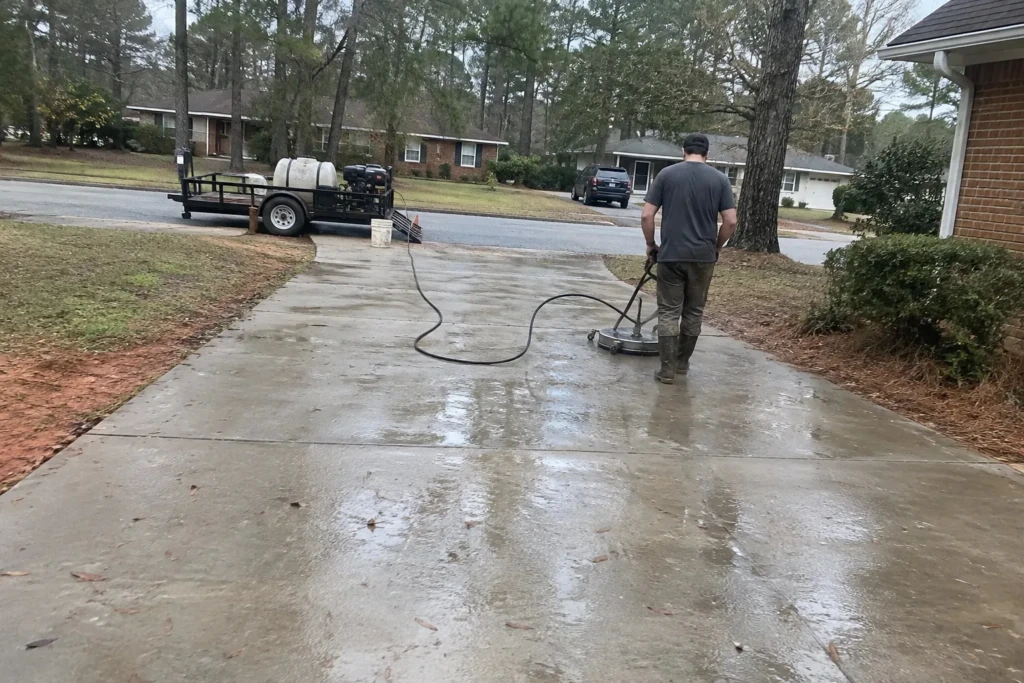
Pressure washing along Augusta Road in Greenville mostly means gentle cleaning of brick, siding, concrete and shingle roofs on mid-century homes that have sat under mature trees for decades. The area sits just south of downtown and developed mainly in the mid-20th century, so you will see ranch houses, traditional two-story homes and renovated or newly built properties side by side. We keep pressure low on older materials and quote after seeing the house. Typical Greenville ranges: house wash about $250 to $1,000+, driveway about $150 to $650.
How the Area Grew, and Why It Matters for Your Exterior
The Post and Courier reports that Augusta Road began as an 1830s trade route to Augusta, Georgia, saw growth around 1900 with trolley lines and paving, then expanded after Greenville High School opened in 1938 and during World War II. Its coverage cites houses built in the 1940s, 1950s and 1960s alongside new builds from the 2010s and 2025. The Greenville library branch on Augusta Road also reflects how settled this corridor is.
That spread of eras is the real cleaning issue. A 1940s cottage, a 1960s brick ranch and a new build next door each want a different approach. Livability describes brick and siding exteriors, mature landscaping and larger lots, a commercial hub along Augusta Street, and Rockwood Park and Cleveland Park nearby by car.
Match the Method to the Material
- Brick: pre-wet, low pressure, gentle cleaner. Old mortar can be soft, so test a small area. White salt or rust stains need a different product than algae.
- Vinyl siding: wash downward, never up under laps, to avoid pushing water behind it.
- Painted wood trim: light pressure only and no blasting of peeling paint.
- Fiber cement: low pressure and follow the manufacturer’s care guidance.
- Concrete: surface cleaner at roughly 3,000 to 4,000 PSI avoids zebra stripes.
See house washing for process, and soft washing versus pressure washing for why the method matters.
Brick Ranch, Two-Story or Updated?
A brick ranch has long walls close to the ground, so splash-back and algae grow low and are easy to reach. A two-story adds ladder work and roof access. Updated properties often place new siding or an addition beside old brick, and the two can need different treatment in the same visit. We clean each material on its own terms and rinse last so cleaner never dries on a different surface. Windows, vents and light fixtures are protected before cleaner goes on. If you are comparing quotes, make sure each one names the same surfaces, because a cheap number often leaves out the roof, the back patio or the second story.
Driveways, Carports and Walkways
Long concrete drives and front walks are common on this style of lot. Red clay stains concrete orange, and oil spots show on lighter slabs. Rust needs an oxalic or phosphoric acid based remover, never bleach. Read why red clay stains concrete faster and how to remove oil stains from a driveway. Service details are on driveway cleaning.
Roofs Under Mature Trees
Black streaks on shingles are usually Gloeocapsa magma algae, and shade makes them worse. Soft washing below about 100 PSI treats the algae without stripping granules. Roofs of this era may be replacements, so check the shingle maker’s guidance if a warranty applies. If a roof is curling, leaking or shedding granules, call a roofer first. Our roof soft washing page covers the method.
When Not to Pressure Wash
- Crumbling mortar or loose brick: call a mason first.
- Peeling paint on trim, especially on pre-1978 homes where lead paint is possible: see a lead-safe painter.
- Soft, spongy wood at the base of columns, sills or fascia: repair before cleaning.
- Failing roofs or active leaks: roofer first.
- A deck or patio with loose boards: fix first, clean second.
Patios, Pavers and Gutters
Larger lots collect leaves and green film on patios. Pavers can be cleaned, re-sanded with polymeric sand and sealed, with sealer reapplied about every 2 to 4 years, as covered on paver cleaning and sealing. Wood decks and stone patios are handled with their own methods. Leaf-heavy lots need gutter cleaning about twice a year, and gutter cleaning costs usually fall around $100 to $300 per home.
Wash Water and Storm Drains
Storm drains in Greenville lead to creeks and rivers, not a treatment plant. Greenville County operates under a federal stormwater permit, and wash water that carries detergent, oil or sediment should not be sent down a street drain. A careful crew blocks or covers nearby inlets, keeps runoff on lawn or landscape where that is appropriate, and rinses plants before and after cleaner. Ask any company how they handle runoff. If the answer is a shrug, keep looking.
DIY or Hire
- DIY is fine: a single-story concrete walk with a surface cleaner attachment on a dry day.
- Hire: two-story siding, roofs, ladder work, wood trim near rot.
- Call a mason, roofer or painter first: crumbling mortar, failing roofs, peeling old paint.
Ladder falls are a real injury risk, which is why roofs and second-story work are better left to professionals. For prices, see the pricing guide, and ask any company for an itemized quote, an arrival window, and how plants are protected.
Questions Readers Ask About Older Streets
Can you wash around window units and old screens? Yes, with the right prep, but loose screens or cracked panes should be fixed first. What about shrubs hugging the foundation? They are pre-wetted and rinsed, and heavy plantings may need to be pulled back by the owner. Will the white chalky film on old brick come off? Often it is efflorescence, a mineral salt that needs a specific cleaner, and it can return if moisture keeps entering the wall. If you see it repeatedly, a mason should look at drainage, flashing and gutters before more cleaning is bought.
A last note on timing, since many readers ask: if you plan to repaint, sell or list the house, wash first and let surfaces dry fully before painting. Paint over a damp, dirty wall will not hold, and a clean surface also lets a painter or inspector see the true condition of the wood and masonry underneath.
Seasonal Calendar for Tree-Lined Lots
- Spring: wait out the heaviest pollen, then wash. Clean gutters after trees finish blooming.
- Summer: good for house and roof soft washing because surfaces dry quickly.
- Fall: clear gutters after leaf drop and wash walks before leaves stain them.
- Winter: concrete cleaning on dry days; avoid freezing temperatures for sealing and wood work.
The cleaning frequency guide covers timing. Bundling a house wash with gutters, or a driveway with the front walk, usually costs less than booking each alone.
Shops and Offices Along Augusta Street
The commercial hub on Augusta Street includes restaurants, coffee shops and a grocery store per Livability. Sidewalks, entries and dumpster pads for that kind of property are covered under our commercial service.
Nearby Areas
Augusta Road is a short drive from downtown Greenville, and North Main sits on the other side of downtown with a similar older-home profile. Overbrook, a City of Greenville historic district, is another established area we cover.
Ready for a quote? Call (864) 477-1558 or request a free quote and we will walk through the job with you.
Why Pressure Washing in Augusta Road, Greenville, SC Is Different
Augusta Road homes span the 1940s through new builds, mostly mid-century brick and siding on tree-lined lots. Mixed eras and mature trees reward a careful, material-by-material approach.
Typical Greenville ranges are about $150 to $650 for a driveway, $250 to $1,000+ for a house wash, and $400 to $1,000+ for a roof soft wash. Size, stories and growth level drive the price. A written quote after seeing the property is the reliable number.
Yes, with low pressure, pre-wetting and a gentle cleaner. But if mortar is sandy or crumbling, high-pressure water can make it worse. A good crew tests a small area first and will tell you to call a mason before washing if joints are failing.
Gentle washing is usually fine, but flaking paint on older homes may contain lead, so avoid dry scraping or blasting. If paint is peeling, have a lead-safe painter assess it. Soft washing at low pressure lifts less paint than a pressure wand.
If shingles are curling, leaking or losing granules, call a roofer first. For streaked but sound shingles, soft washing under about 100 PSI treats the algae without stripping granules. Never use high pressure on asphalt shingles, since makers generally discourage it.
We use your outside spigot for most residential work and do not need electricity. For roofs and siding the soft wash rig carries its own tank where that helps. If your home is on a well or has low water pressure, mention it when you request a quote so we can plan around it.
Yes. Our hours are Monday to Saturday, 8 AM to 6 PM. Saturday slots fill first in spring when pollen season starts, so ask early if a weekend works best for you. We do not schedule work on Sundays.
Get a Free Quote
Call (864) 477-1558 or request a quote online. We reply quickly to every request.