
Concrete Cleaning in Greenville, SC
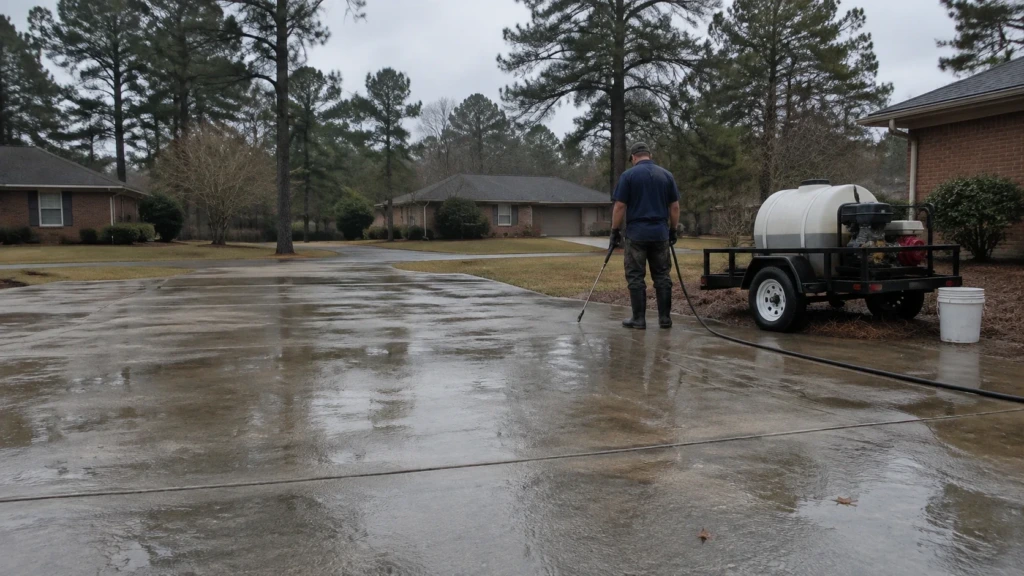
Concrete cleaning in Greenville SC means more than a driveway: sidewalks, front steps, patios, pool decks, garage floors, parking pads, retaining walls and commercial flatwork all go green, orange or black faster than most people expect in the Upstate. A professional job uses a rotary surface cleaner, the right pre-treatment for each stain, and controlled pressure, so the slab comes out evenly clean with no stripes or etching. Typical pricing is about 8 to 30 cents per square foot for residential flatwork and 10 to 40 cents for commercial, with the final number coming from a quote. Here is how it works and how to hire well.
What We Clean (Beyond the Driveway)
Our driveway cleaning page covers the biggest slab on most properties. This page covers every other concrete surface, because each one behaves differently.
- Sidewalks and walkways. Shaded walks stay damp, grow algae and become slippery. They are also where a trip hazard or a slick patch matters most.
- Front steps and stoops. Cleaned with a mix of surface cleaner and hand wand, with extra care around railings, brick and door thresholds.
- Patios and pool decks. Often broom-finished or exposed aggregate. Pool decks need low-residue rinsing and a plan to keep chemistry out of the pool. If your patio is wood or composite, see deck and patio cleaning instead.
- Garage floors and parking pads. Mostly an oil, tire and salt-track problem, so degreasers and hot water matter more here.
- Retaining walls and curbs. Vertical concrete streaks and holds green growth. It is cleaned with lower pressure and a pre-treatment, working top down.
- Commercial flatwork. Storefront walks, dumpster pads, loading areas and parking lots. See commercial pressure washing for scheduling around business hours.
Know Your Concrete First
The finish decides the method. A crew that treats every slab the same is the one that leaves damage.
- Broom finish. Common on driveways and walks. Grooves hold clay and algae, so pre-treatment and dwell time do most of the work. In one forum thread, pros told a homeowner that visible parallel lines after washing were just the broom finish showing through, not damage.
- Smooth trowel finish. Shows tire marks, etching and lap lines more clearly. Use lower pressure and more chemistry.
- Exposed aggregate. The stones sit in a cement paste. Too much pressure or too little distance erodes the paste and loosens stones, so this is a low-pressure, wide-fan job.
- Stamped or colored concrete. May carry a sealer or integral color. Aggressive cleaning can dull the sealer. Tell the company before they start.
- Sealed vs unsealed. Sealed concrete resists stains but can turn cloudy or slick if cleaned wrong. Unsealed concrete is more porous, and stains soak in faster.
- New concrete. Sealer maker Rust-Oleum says new concrete should cure at least 28 days before sealer goes on, and coatings maker Tnemec and Concrete Decor magazine explain the wait is mostly about moisture: trapped water causes haze, blush and coating failure. For washing, many pros on the Pressure Washing Resource forum say young concrete etches easily, and some tell homeowners not to power wash it for up to two years. That is forum opinion, not a code, so treat it as a reason for a gentle approach and ask your builder or concrete contractor first.
Diagnose the Stain Before You Wash
The wrong product can set a stain. This is the checklist we run in the walk-around.
- Green, gray or black film (algae, mildew). Algae needs moisture and nutrients. The Maryland Extension Home and Garden Information Center says growth is usually in shady, damp spots, that a one-time treatment will not last if those conditions remain, and that washing once or twice a year may be needed. Trimming back shade and fixing standing water helps. A federal GSA mildew procedure uses a sodium hypochlorite mix and warns never to combine it with ammonia and to rinse residue away.
- Orange-brown haze (red clay). Fine iron-rich soil settles into the pores. Our post on why red clay stains concrete faster explains why Upstate concrete tints so quickly.
- Rust spots. Need an oxalic or phosphoric acid based remover. Bleach does not remove rust. Sprinklers on well water are a common source, and the stain returns until the water is redirected.
- Oil and grease. Fresh drips lift with degreaser and hot water. Old stains may need a poultice, a paste that draws oil out of the pores as it dries. Read how to remove oil stains from a driveway for the DIY version.
- Tire marks and other surface grime. Many Greenville cleaners list tire marks among what they remove, but none of the pages we read explain results on set rubber, so expect improvement rather than a promise.
- White crust (efflorescence). Quikrete explains it as salts carried to the surface by moisture, and says to test any acid based remover in a small area first, since it can etch. If bloom returns after cleaning, moisture is the underlying issue.
- Paint and sealer damage. Forum pros describe white residue after paint stripper damaged a sealer, which took stripping and resealing, not just washing. Tell your cleaner about any spill, stripper or old sealer up front.
- Dark lines around cracks. Pros on the same forum say these often do not come off and do not mean the cleaning was done wrong. Ask for honest expectations before work.
How a Professional Cleans Concrete
Surface cleaner, not a bare wand
A rotary surface cleaner holds the spray at a constant height under a hood. That is the main defense against zebra stripes. For flatwork we run about 3,000 to 4,000 PSI with 4 to 8 GPM, using the wand only on edges, steps and walls. Pros on the Pressure Washing Resource forum separate true etching, where gray cream washes off the surface, from striping caused by uneven passes. Their advice is to pre-treat first, overlap passes (one thread suggests about 3 inches), cross the first pass from another direction, and rinse thoroughly. Some use a post-treatment of sodium hypochlorite to blend remaining lines, and one thread calls a machine under 4 GPM bare minimum, which fits the flow range above.
Pre-treat and let it dwell
Chemistry does the lifting, pressure just carries it away. Clay, algae and oil each get their own product, then a rinse before anything dries on the slab.
Hot water or cold
Cold water handles algae, clay and dirt well. Hot water is commonly used to help loosen grease and oil, and several hot water companies advertise it for that. Heated “power washing” typically adds 10 to 15 percent to the price. It is worth it on garage floors and restaurant pads, and not needed on a shaded walkway.
PSI and GPM in plain words
PSI is how hard the water hits. GPM is how much water moves, and it is what actually carries dirt away. More PSI is not better. Too much strips the cream. In a thread about an etched 14-month-old driveway, pros said the fix was grinding the surface flat, which is expensive, so prevention matters.
When Not to Wash Concrete
- Scaled, flaking or spalled concrete. The PACA product information sheet describes scaling as pock marks where the surface paste has come away, often tied to deicers and poor finishing or curing. Pressure can remove more. A careful low-pressure cleaning may be fine, but cleaning will not repair it. Have a concrete contractor assess major damage first.
- Young concrete. See the new concrete note above. When in doubt, rinse gently and wait.
- Loose or sunken slabs. Cleaning will not fix the trip hazard.
- Failing sealer or coating. Rust-Oleum says to remove damaged or peeling sealer before resealing, so plan a strip and recoat rather than a wash.
- Exposed rebar or mesh. Get it assessed by a concrete contractor before any cleaning.
Should You Seal Concrete After Cleaning?
Sealing is optional. In a forum thread on whether to seal after cleaning, many pros said they do not, calling it an add-on, and said it is most often done on exposed aggregate, stamped or colored concrete. The Rust-Oleum penetrating sealer sheet calls for clean, dry concrete, 28 days of cure on new slabs, dry weather between 50 and 85 degrees F, and removal of damaged old sealer. Concrete Decor notes that sealing damp concrete can cause haze. Film-forming sealers can also look glossy and become slick, so keep traction in mind on steps and pool decks. For pavers, sealing is a bigger decision, so see paver cleaning and sealing.
Safety, Slip Hazards and Runoff
- Wet algae is slick. Keep people and pets off until rinsed and dry. Pool decks and steps need extra care.
- Plants and pets. We pre-wet landscaping and rinse it afterward. Tell us about koi ponds, gardens and small animals.
- Storm drains. Detergent wash water should not enter storm drains, and Greenville County treats it as illicit discharge. As an example of how cities handle it, Portland, Oregon prohibits wash water from reaching its stormwater system and asks crews to work in dry weather, block inlets, keep water in the work area and sweep first when possible. Ask any company how they manage runoff here.
How Often to Clean
Plan on every one to two years for most residential concrete. One Greenville company suggests every 12 to 24 months, and shaded walks and damp steps may need it more often, since algae returns when moisture and dust nutrients stay. See our guide to how often to pressure wash.
Concrete Cleaning Cost in Greenville
Typical Greenville-area pricing for residential driveways and flatwork is about 8 to 30 cents per square foot, which usually works out to $150 to $650 for a driveway. Commercial flatwork typically runs 10 to 40 cents per square foot. Rust, heavy oil, heated water and steep or tight access can raise the number. Minimum charges apply on small jobs, so bundling walks, steps and a patio often gives a better value. See our pressure washing cost guide for the full breakdown. These are typical ranges, and your price comes from a quote.
DIY or Hire a Pro?
DIY is reasonable for a small stoop with a light film and a basic washer. The risks are stripes, etched patches and runoff, and forum threads are full of homeowners who etched a driveway with a bare wand. Hiring makes sense for large areas, old stains, sealed or stamped surfaces, or if you want an even, streak-free finish. If you choose DIY, here is the step by step guide on how to pressure wash a driveway.
What a Good Quote Includes
- Every surface listed with approximate square footage
- The method for each stain: surface cleaner, hot water, acid remover, poultice
- Whether sealing is included or optional, and the product type
- How runoff and landscaping will be handled
- Total price, minimum charge, and what could change it
- The schedule, rain plan, and when you can walk or park on it
Red Flags When Hiring
- A price quoted over the phone without photos or a visit
- A bare wand on a driveway or patio with no surface cleaner
- Bleach on rust, or the same product for every stain
- No plan for plants, drains or pool water
- A promise of a perfect, like-new result on old oil or rust
- No written quote, only a verbal number
Where We Clean Concrete in the Upstate
We serve Greenville and nearby communities. See all service areas, or check pages for Greer and Simpsonville. If your driveway is in Taylors, our Taylors driveway and sidewalk guide has local detail.
Call (864) 477-1558 or request a free quote for your concrete.
Why This Matters Here
Upstate humidity, shade from mature trees and iron-rich red clay soils mean concrete here picks up algae and orange staining faster than drier climates. Walks, steps and shaded patios stay damp longer, so they tend to go slick first.
Typical pricing is about 8 to 30 cents per square foot for residential concrete, often $150 to $650 for a driveway, and 10 to 40 cents for commercial flatwork. Rust, heavy oil, hot water and difficult access add cost. Your final price comes from a written quote.
Yes, when done with a surface cleaner and the right pressure for the finish. Exposed aggregate, stamped and new concrete need gentler methods. Cracked or flaking concrete should be repaired first, since water pressure can make damage worse.
Often to a large degree. Rust needs an oxalic or phosphoric acid based remover, never bleach. Fresh oil lifts with degreaser and hot water, and old oil may need a poultice. Deep, old stains may fade rather than disappear, and honest companies say so.
Sealer makers such as Rust-Oleum call for at least 28 days of cure before sealing. For washing, many pros say young concrete etches easily and suggest waiting much longer, even a year or two. Ask your builder or concrete contractor, and use a gentle rinse until then.
We work Monday to Saturday, 8 AM to 6 PM, and Saturday slots fill early in spring. A driveway plus walks usually takes one to three hours. Concrete is typically ready to walk on once the surface is dry, often within an hour or two.
Usually not. We need access to the areas being cleaned and often an outdoor spigot if the crew does not bring its own water. Move cars, furniture and toys beforehand, and tell us about gates, pets and sprinklers. Be reachable by phone.
Get a Free Quote
Serving Greenville, SC and the Upstate. Call (864) 477-1558 or request a quote online. We reply quickly to every request.