Commercial Building Washing in Greenville, SC
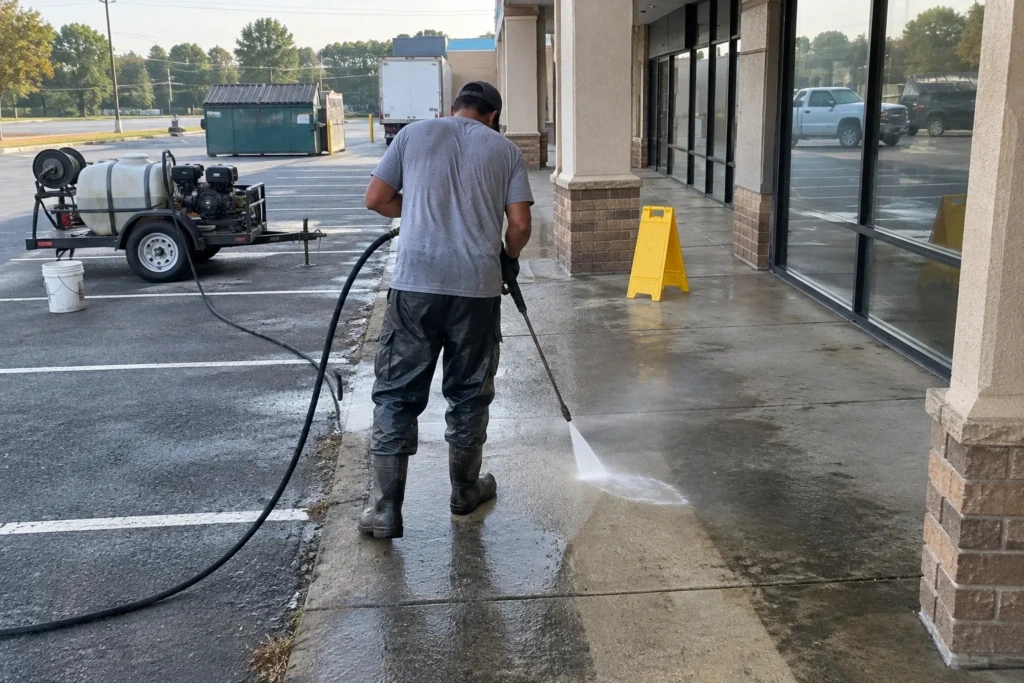
Commercial building washing in Greenville, SC keeps storefronts, offices and medical buildings clean without disrupting business. Painted and stucco walls are soft washed at low pressure, concrete is cleaned with a surface cleaner, and flatwork typically runs about $0.10 to $0.40 per square foot. Building facades are priced by surface, height and condition after a walk-through. The right method per surface, a schedule that fits your hours, and a written scope are what separate a good wash from a damaged wall.
Matching the Method to the Building
Storefronts and retail strips
Glass, aluminum frames, brick or stucco veneer and the sidewalk out front each need a different touch. We soft wash painted and stucco surfaces and use a surface cleaner on concrete walks so you do not get stripes. Gum and food stains are a retail reality, and hot water helps, although heated service can run 10 to 15 percent more.
Restaurants
Grease at back doors, drive-throughs and dumpster pads is the main issue, and it is also where wash water needs the most care. Work is usually best after close. Entrance and patio areas are cleaned last so they are dry for opening.
Offices and corporate buildings
Offices often combine EIFS, painted concrete panels, metal canopies and glass. Soft washing is the safe choice for most of these. High elevations may need a lift or rope access, and we scope that in the proposal rather than guess.
Medical and professional offices
Entrances, ramps and parking must stay usable for patients. We plan around appointment hours, keep one accessible path open where possible and use low-odor products near ventilation intakes. Cleanliness of walkways matters for accessibility, since ADA routes must be stable, firm and slip resistant.
What Works on Which Surface
- Painted stucco and EIFS: soft wash at low pressure; high pressure can drive water behind the finish
- Brick and block: pre-wet, low-pressure cleaning solution, thorough rinse; old mortar can be damaged by hard spray
- Concrete and flatwork: surface cleaner, often 3,000 to 4,000 PSI, to avoid wand stripes
- Metal canopies and storefront frames: low pressure with detergent, rinsed to prevent spotting
- Glass: a separate line item, not part of a standard wash
If a wall is peeling, cracked or has failing sealant, washing can reveal the problem rather than fix it. We will point it out so you can talk to a painter or a building contractor before it gets worse. Our comparison of soft washing vs pressure washing explains why method matters.
Parking Lots, Sidewalks and Drive-Throughs
Flatwork collects oil, tire marks, gum and the green slime that makes entrances slippery after rain. A surface cleaner removes buildup evenly, and degreasers treat drive-through lanes and loading zones. Clean walks are a safety measure: algae and mildew on concrete are a real slip hazard for customers and employees.
Small oil stains on concrete may respond better to the methods in our guide on removing oil stains from concrete. Asphalt is different, since hot water and strong solvents can soften it, so we test first.
Dumpster Pads and Trash Enclosures
Dumpster pads are the dirtiest part of most properties and the area tenants complain about most. Industry guidance suggests monthly cleaning for pads that serve food service and quarterly for office or retail pads. We clean the pad, enclosure walls and apron with hot water and degreaser where needed. Grease and food residue in wash water cannot run into the storm drain, so collection is planned before the job.
Wash Water and Storm Drains
Greenville County treats detergent wash water reaching storm drains as an illicit discharge, and its ordinance allows civil penalties. Near catch basins we use drain covers or berms and plan how wash water will be collected and disposed of, and the proposal describes it. Products use biodegradable surfactants, plants are pre-wet and rinsed, and runoff is controlled.
If your property has a retention pond or sits near a creek, tell us at the walk-through. Local requirements can vary by site and municipality, so we confirm them for your address.
Off-Hours and Scheduled Work
Most businesses cannot close for a wash. We schedule early morning, evening or weekend work so customers see a clean property with no wet floors and no hoses across the entrance. Restaurants usually prefer after close, offices weekends. Tell us your slowest hours and we build the plan around them, with written confirmation and notice before a weather delay.
Graffiti, Gum and Rust
- Gum: heat and a surface cleaner pass; budget more for heavily trafficked retail entrances
- Graffiti: results depend on the surface; porous brick and stucco can ghost, painted walls may need touch up paint afterward
- Rust: needs an oxalic or phosphoric acid based remover, never bleach, which can set the stain
Recurring Plans That Keep It Clean
Washing once helps. Washing on a schedule is better. Entrances and dumpster pads may need monthly service, walks and lots quarterly, and facades once or twice a year, depending on foot traffic and tree cover. Recurring plans are priced per visit or per month in the same proposal. They keep buildup shallow and protect surfaces from deep staining.
Written Proposals, Not Guesswork
Every commercial job should start with a walk-through and end with a written proposal that lists areas, methods, schedule and price. If your company needs vendor documentation or a certificate of insurance, request it in writing from every bidder before approving work. We do not publish insurance claims on this site yet, and we will tell you plainly what we can provide for your file.
- Walk-through and measurements
- Written scope by area (facade, flatwork, dumpster pad, glass if requested)
- Quoted price, per visit or per recurring plan
- Exclusions listed, such as sealing, rust treatment, windows
- Before and after photos on request
What Affects Commercial Pricing
- Total square footage and number of stories
- Surface type: concrete, brick, stucco, EIFS, metal or glass
- Condition: light dust versus years of buildup, oil or gum
- Access: lifts, tight alleys or limited water sources
- Hours: premium time slots can change scheduling cost
- Containment needs near storm drains or retention ponds
Quoting by phone from a photo is guesswork. A short walk-through lets us measure, test a small area and promise a scope that matches the work. For rate comparisons see our pressure washing cost guide.
Seasonal Timing for Businesses
Spring pollen coats every horizontal surface, and fall leaf drop clogs drains and stains wet pavement. Many managers schedule a spring wash after pollen peaks and a fall visit before the holidays, when traffic is highest. Summer humidity grows algae fastest on shaded walls and walkways, so a mid-season entrance touch-up can prevent slick spots. Tell us your busiest weeks, including sales periods, grand openings and tenant move-ins.
If you manage multiple units, see our page on apartment and HOA pressure washing. For the full list of commercial services, visit commercial pressure washing. Shopping for a property in downtown Greenville or the Verdae area, or elsewhere in the Upstate? See all service areas.
Call (864) 477-1558 or request a free quote and we will walk the property with you.
Related: our concrete cleaning service covers driveways, walks, patios and slabs beyond the surface described here.
Why This Matters Here
Upstate commercial buildings collect pollen, mildew and road grime quickly, and Greenville County treats detergent wash water in storm drains as illicit discharge. Wash water control and surface-specific methods are part of every commercial job.
Flatwork typically runs about $0.10 to $0.40 per square foot, and heated service adds roughly 10 to 15 percent. Facades are priced by surface, height and condition. These are typical ranges, not quotes. A walk-through and written proposal give you an exact price. Call (864) 477-1558.
Not when the method fits the surface. We soft wash stucco, EIFS and painted walls at low pressure and avoid forcing water into joints and seals. Peeling paint or failing caulk can worsen under any washing, so we point those out first and may recommend a painter.
Facades usually need one or two washes a year. Entrances and dumpster pads need more often, from monthly for food service pads to quarterly for office and retail. Shade, tree cover and foot traffic can shorten the cycle, so we set the plan at the walk-through.
Yes. We work early mornings, evenings and weekends so customers and employees are not disrupted. Restaurants often choose after close, and medical offices keep entrances open. We confirm the window in writing and notify you before any weather reschedule.
We use your outside spigot for most residential work and do not need electricity. For roofs and siding the soft wash rig carries its own tank where that helps. If your home is on a well or has low water pressure, mention it when you request a quote so we can plan around it.
You receive a written, itemized quote before any work is scheduled, and you pay when the job is finished and you have looked it over. Nothing is added on site without your approval. Ask about accepted payment methods when you book.
Get a Free Quote
Serving Greenville, SC and the Upstate. Call (864) 477-1558 or request a quote online. We reply quickly to every request.