Best Time of Year to Pressure Wash Your House in Greenville
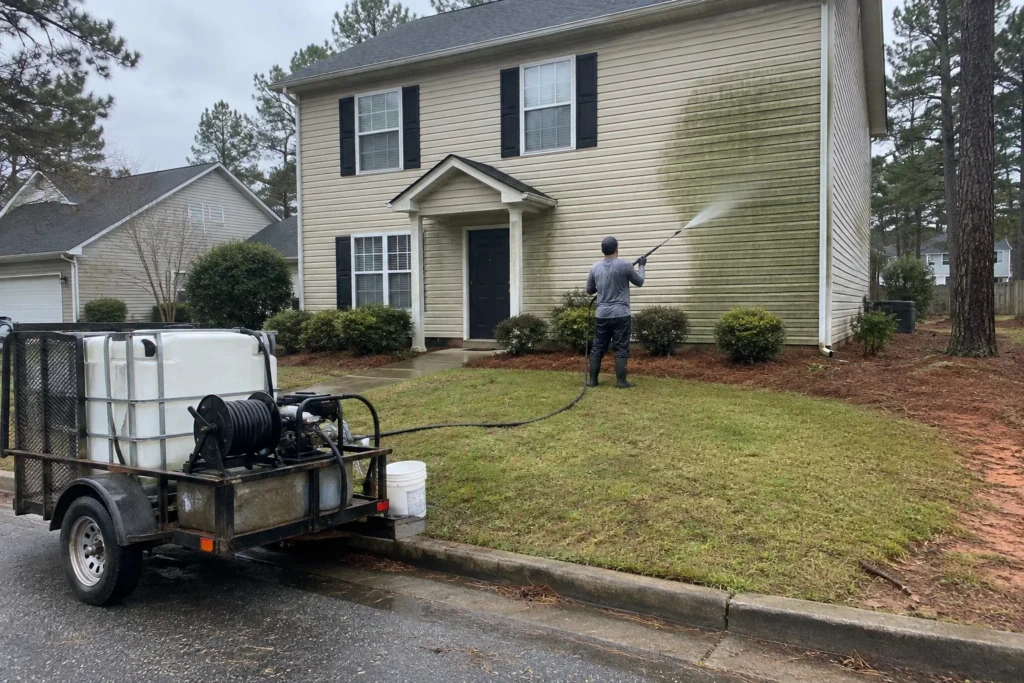
Quick answer: the best time of year to pressure wash a house in Greenville is late April through May, right after the pine and oak pollen settles, with a second window from mid September to early November before the first freeze. Summer works for roofs and concrete if you start early. Winter washing is possible on mild days above about 50 degrees, but sealing, staining, and heavy mildew treatment should wait for spring.
Most of the advice online comes from Michigan, New Jersey, Atlanta, or Oklahoma and talks about washing off road salt. That is not your problem here. In the Upstate the calendar is driven by three things: a short, intense pollen season, a long humid stretch that feeds algae and mildew, and a mild winter with just enough freezes to complicate sealing. This guide walks the year month by month using National Weather Service normals for Greenville-Spartanburg and Clemson Extension notes on pollen, then tells you which surface to clean when, and how to plan around a sale, a party, or the spring rush.
What the Greenville climate actually does to your exterior
The National Weather Service 1991 to 2020 normals for Greenville-Spartanburg tell the story. January averages a high of 53 and a low of 32. By April the normal high is 73, by July it is 90 with lows near 69, and it stays above 80 through September. Rain is spread across the whole year at roughly 49 inches, with August and December the wettest months at about 4.6 inches each. There is no dry season to count on.
Freezes bookend the washing year. Looking at the NWS freeze records for 1991 through 2020, the first fall freeze at the airport lands in early November on average, and the last spring freeze in late March. It has come as early as mid October and as late as the end of April in that period. Those dates set the limits for anything that needs to cure, which is why sealing and staining belong in the middle of the calendar, not the edges.
Between those freezes you get warmth and moisture, which is exactly what Gloeocapsa magma and mildew want. The Asphalt Roofing Manufacturers Association notes that roof algae thrives in warm, humid conditions, and the same holds for the green film on north-facing vinyl. If you want the fuller picture of how fast each surface gets dirty here, see our guide on how often a Greenville house needs washing.
Month by month: when to pressure wash in the Upstate
January and February
Normal highs sit in the low to mid 50s and lows hover at freezing. You will get mild stretches, and a soft wash on a 55 degree afternoon is fine for siding that will not see shade all day. Skip anything that needs to dry fast, keep cleaning solution off surfaces that will drop below freezing overnight, and do not seal or stain. This is the quietest time to book, so if your house looks rough and the forecast cooperates, you can usually get a date within days.
March
The last freeze usually falls near the end of March, and pine pollen starts coating cars and porches around the same time. Clemson Extension describes the yellow-green pine pollen blanket as a late March through April event. Washing the house in March means paying to clean it twice. March is a good month for the things pollen does not touch: gutters, driveways, and a roof soft wash on a dry week.
April
Pollen peaks. Oaks follow the pines, and the yellow film on everything is at its worst. Hold off on siding and windows unless you are prepping for photos or an event. Use April to get on a schedule instead. Quotes and bookings pile up fast from here through June, so a confirmed May date is worth more than a frantic call in the middle of May.
Late April through May: the prime window
Once the trees finish, usually by early to mid May in the Greenville area, you get the single best stretch of the year. Normal highs run from the low 70s into the low 80s, nights are above 50, and the surfaces dry quickly. Wash siding, soffits, gutters faces, porches, and windows now. This is also the earliest safe month to clean and stain a wood deck or seal pavers, because the 50 to 90 degree application range most coating makers specify is reliable day and night.
June through August
Normal highs are 87 to 90 and humidity is heavy. Surfaces dry so fast that detergent can streak on sunny vinyl, so pros start early and work the shaded side of the house as the sun moves. Roofs actually clean well in the heat, since the solution stays active and the algae is at its most visible. Concrete, pool decks, and patios are good summer jobs. August is the wettest month on average, so build a day or two of slack into a deck staining plan.
September to early November: the second window
Highs fall from the low 80s to the low 60s and the humidity finally breaks. This is the best time for a second house wash if you live under heavy shade, and the best time of all for decks, fences, and sealing since there is less afternoon rain than in summer. Greenville County fall color peaks in late October, with downtown following in early November, which means leaf drop runs right into the first freeze. Plan the gutter cleaning for after the bulk of leaves fall, usually mid to late November, and the house wash before it.
Late November and December
The first freeze usually arrives around the first week of November. From then on, washing becomes a day by day call based on the forecast. Gutters are the priority, and a house wash before holiday guests is common and reasonable when highs are in the 50s. December is one of the wettest months, so expect reschedules.
Winter pressure washing limits: the temperature thresholds that matter
Winter washing in Greenville is not off the table the way it is in the Midwest. The question is whether the chemistry and the drying work, and whether anything will freeze before it dries.
- Below 32 degrees: do not wash. Water in siding laps, under shingles, and in concrete pores expands as it freezes and can widen hairline cracks. Wet walkways turn into ice.
- 32 to 40 degrees: sodium hypochlorite, the active ingredient in soft wash solutions, works so slowly that pros on the Pressure Washing Resource forum describe effectiveness falling off around 40 degrees. The mix will not freeze (a 6 percent household solution freezes near 19 degrees and 12 percent near 5), but it will not clean well either.
- 40 to 50 degrees: workable for rinsing pollen or light dirt. Mildew and algae need much longer dwell times, so a job that takes two hours in May can take most of a day and still come out lighter than you hoped.
- 50 degrees and up: normal soft washing. Many experienced cleaners simply will not wash below 50, and that is a reasonable line for a homeowner to adopt too.
- Sealers and stains: Sherwin-Williams puts most exterior stains in a 50 to 90 degree safety range with 70 as the optimum, and asks for two to three dry days after rain before application. Night temperatures count, not just the afternoon high. In Greenville that rules out most of November through March.
One more winter rule: the roof. Frost on shingles makes a roof unsafe to walk, and cold slows the kill on algae. If you have black streaks in January, note them and book a roof soft wash for March or April when nights are warmer.
Roof, siding, and concrete have different best seasons
Roof
Best months are March through June and September through October. Roof algae needs a long dwell with the solution and a gentle rinse, and both go better when the shingles are warm and dry. Summer is acceptable and even effective, but it is hard on the crew and the bleach solution flashes off faster. Never pressure wash shingles in any season; ARMA says plainly not to use a power washer or brush on algae, because it strips granules. Our roof moss and algae removal guide covers what the streaks are and how soft washing removes them.
Siding and trim
Late April through May, then September through October. Wash after pollen, before leaves, and while nights are above 50 so mildew spots get a full kill. A soft wash house washing at low pressure is the right method for vinyl, Hardie, brick, and painted wood year round; the season changes the dwell time and the drying, not the technique. If you are weighing whether to let someone use high pressure on your siding at all, read soft washing versus pressure washing first.
Concrete, pavers, and decks
Concrete is the most forgiving surface and can be cleaned any month above freezing. Red clay tracking and tire marks are worst after wet winters, so a March or April driveway cleaning is common. Pavers and wood are different: clean them in spring or fall only if you plan to seal or stain within the next dry week, because a freshly cleaned deck left bare through summer grays and grows mildew again. The sweet spot for paver cleaning and sealing and for deck and patio cleaning followed by stain is May or late September through October.
What to do before and after each season
Before spring (February to March)
- Walk the house and photograph green or black areas on north and east walls so you can compare after washing.
- Clean gutters and downspouts once before pollen and spring storms, especially under oaks and pines.
- Get on a May calendar now. Ask for a written scope that lists siding, soffits, gutters faces, and whether windows and screens are included.
After spring (late May to June)
- Wash the house and porches once pollen stops settling on the cars.
- Rinse plants and beds before and after any bleach solution and keep wash water out of the street drain. Greenville County treats detergent runoff into storm drains as an illicit discharge.
- Stain the deck or seal pavers within a week of cleaning, with 48 to 72 dry hours on wood before stain.
Before fall (late August to September)
- Book a second siding wash if you are under heavy shade or near a wooded lot, and a roof soft wash if streaks have spread over the summer.
- Finish any sealing or staining by mid October so you have warm nights for curing.
After leaf drop (November)
- Schedule gutter cleaning once the oaks have mostly dropped, typically mid to late November, so the gutters are clear for December rain.
- Rinse walkways and steps of leaf tannin stains before they set over winter.
- Leave decks and pavers alone until spring unless something spilled.
Scheduling before a sale, a listing photo, or an event
Exterior photos are the first thing a buyer sees, and a washed house photographs noticeably cleaner than one with green shadows under the eaves. Aim to wash one to two weeks before the photographer comes. That leaves time for a touch up if a storm blows debris onto the porch, and it is close enough that pollen or dust will not have resettled. If the roof has streaks, do the roof first, then the house, because roof runoff can leave faint lines on clean siding.
For a graduation party, wedding, or holiday gathering, wash the weekend before, not the day before. Surfaces need a dry day to look their best, and you want a buffer for weather. Pros who work the South say the same thing: homeowners almost always book around an event, and the calendar fills in the two weeks ahead of Memorial Day, graduation season, and Thanksgiving.
If you are selling in winter, a house wash on a dry day above 50 is still worthwhile. Just know that heavy mildew may not fully release in cold weather, and a reputable company will tell you that before quoting rather than after.
Why spring is so busy, and how to plan around it
Every homeowner in Greenville sees the same pollen at the same time, and every company gets the same calls in the same three weeks. Add the realtors prepping spring listings and the HOA reminder letters that go out in April, and May books up. That is when you see the complaints: no shows, quotes that jump on the day, crews rushing a job to get to the next one.
- Book in March or early April for a May date. Ask for a written confirmation with a rain policy.
- Get the quote in square feet and stories, not a flat number over the phone. Our pressure washing cost guide lists the typical Greenville ranges so you can spot a quote that is far off.
- Consider the second window. A late September wash under 75 degree highs often turns out cleaner than a rushed May job, and dates are easier to get.
- If your home sits under heavy canopy, as many do around the foothills near Travelers Rest, plan for two washes a year rather than fighting for one perfect spring slot.
- Newer subdivisions with open lots, common around Simpsonville, dry faster and stay cleaner, so a single late spring wash usually carries the year.
When not to wash, and who to call instead
- Below freezing or when the overnight low is under 32 within a day of washing.
- Peeling paint or chalking stucco: a wash will make it worse. Call a painter first; a soft wash is prep for paint, not a substitute.
- Lifted or brittle shingles, or a roof over about 15 years old with granule loss: have a roofer look before anyone puts solution on it.
- Rotten deck boards or loose railings: pressure of any kind will tear the wood. Repair, then clean.
- During a drought advisory or watering restriction: ask the company how they handle it and whether they can reschedule without a fee.
Ask any company three questions before booking: what pressure and solution they use on your siding type, how they protect plants and keep runoff out of storm drains, and what happens if rain moves in. Clear answers on those tell you more than any season does.
Ready to pick a date? Call (864) 477-1558 or request a free quote and we will suggest the best window for your roof, siding, and concrete based on the forecast and what is growing on your house.
Sources
- weather.gov: /media/gsp/Climate/GSP/GSPJANNORM.pdf
- weather.gov: /media/gsp/Climate/GSP/GSPAPRNORM.pdf
- weather.gov: /media/gsp/Climate/GSP/GSPJULNORM.pdf
- weather.gov: /media/gsp/Climate/GSP/GSPAUGNORM.pdf
- weather.gov: /media/gsp/Climate/GSP/GSPNOVNORM.pdf
- weather.gov: /media/gsp/Climate/GSP/GSPDECNORM.pdf
- weather.gov: /media/gsp/Climate/GSP/frzgsp.pdf
- hgic.clemson.edu: /why-pine-pollen-covers-everything-in-spring-the-pollening-in-the-south/
No. November normal highs are in the low 60s, and a soft wash on a dry day above 50 degrees works fine. The first freeze usually comes in the first week of November, so avoid days with a freeze in the overnight forecast. Skip sealing and staining until spring, since nights are too cold for the coatings to cure.
Wait until the yellow film stops showing up on your car overnight, which in the Greenville area is usually early to mid May. Washing in late March or April means pollen resettles within days. If you need a clean house for photos during pollen season, wash anyway and plan a quick rinse afterward.
Light rain is not a problem for a house wash, and it actually helps rinse. Heavy rain or storms will get the job rescheduled because the solution needs dwell time and the crew needs to see what is clean. Decks, pavers, and anything being sealed or stained need two to three dry days afterward, so those jobs move.
You do not need to be home as long as the crew has access to outdoor spigots and the gates are unlocked. A typical single story house wash takes two to four hours, two stories a bit longer, and a roof soft wash is usually a half day. Close windows, move cars and patio furniture, and bring in anything that should not get wet.
Most exterior stains and sealers call for air and surface temperatures between 50 and 90 degrees, with about 70 ideal, and that includes the overnight low during curing. In Greenville that makes May through mid October the reliable window. Also allow two to three dry days after rain or washing before you apply anything.
Not bad, just different. Roofs and concrete clean well in summer heat. Siding is the challenge, because solution dries fast on sun-baked vinyl and can streak, so crews start early and follow the shade. Expect afternoon storms to interrupt, and book deck staining with a weather buffer since August is the wettest month.
Get a Free Quote
Serving Greenville, SC and the Upstate. Call (864) 477-1558 or request a quote online. We reply quickly to every request.