How Often to Seal Pavers in Greenville SC (and When Not To)
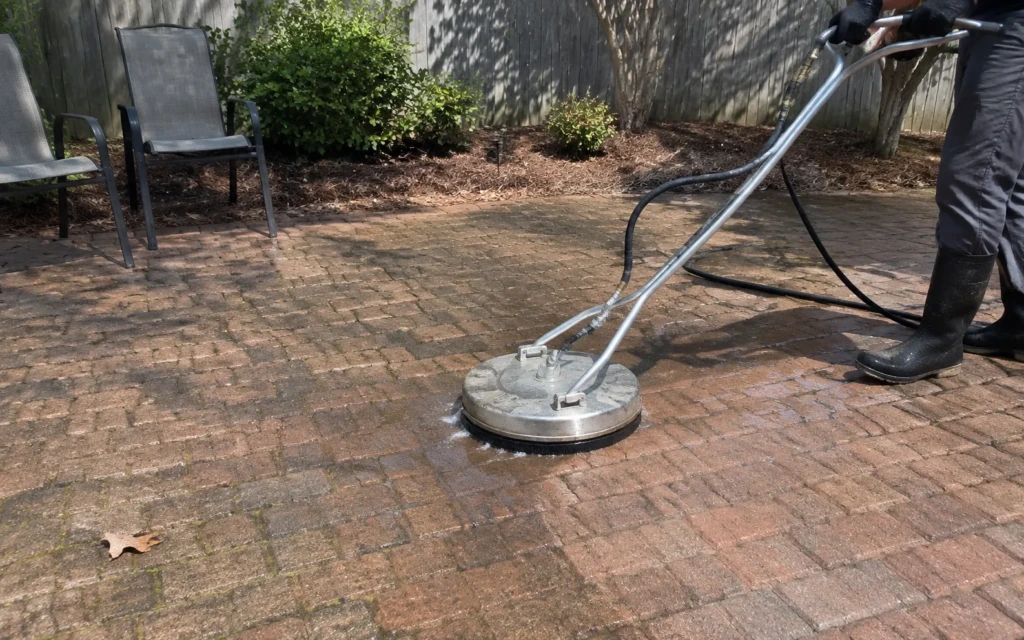
Quick answer: most paver patios and driveways around Greenville need resealing every 2 to 4 years. Paver makers such as Belgard and Unilock say 3 to 5 years as a baseline, and Upstate humidity, deep shade, and red clay splash usually push that toward the shorter end. Do pavers have to be sealed? No. Pavers work fine unsealed. Sealing is a choice you make for stain resistance, locked joints, and color, and it only pays off when the surface is clean, dry, fully cured, and sealed in the right weather.
Most pages that rank for this question are written for Florida sun or Pacific Northwest rain and stop at “every 2 to 3 years.” Below is the Upstate answer: what sealer does, which type to pick, how long new pavers must cure, why white haze happens here, what it costs, and when to skip sealing.
Do pavers need to be sealed?
No. Concrete and clay pavers are structural products, and manufacturers say outright that sealing is optional. Unilock notes its pavers do not require sealing to perform, and Belgard treats sealing as a finish decision, not a requirement. An unsealed patio will not crumble.
What an unsealed surface will do in Greenville is stain faster, grow algae in shade, and lose joint sand in hard rain. If you want the pavers to keep their current look with less scrubbing, sealing earns its cost. If you do not mind a weathered tumbled patio, skip it and simply have the surface cleaned and re-sanded every few years.
What a paver sealer does, and what it does not
A sealer is a resin that either soaks into the paver or forms a thin film on top. Either way it reduces how much water and oil the surface absorbs.
- It does: slow stains from grease, leaves, and red clay splash, make algae and mildew easier to rinse off, slow UV fading, and (with a joint stabilizing product) bind the top of the sand so it stops washing out.
- It does not: fix a sinking base, stop weeds growing from seeds that land on top, cure drainage problems, prevent efflorescence, or make a surface maintenance free. Unilock’s pros and cons guide is blunt that sealer cannot remedy a bad subbase or poor drainage.
- It can hurt: a gloss sealer on smooth pavers becomes slick when wet, and a film sealer applied over damp pavers turns cloudy white. Both complaints show up in nearly every review thread about paver sealing.
Sealer is a raincoat, not a repair. If joints are heaving or water pools after a storm, fix that first.
Film-forming vs penetrating sealers
This is the single most important choice, and most contractors never explain it.
Film-forming (acrylic, urethane, “wet look”)
These sit on the surface and build a visible coating. Solvent-based and water-based acrylics are the common ones. They darken and enrich color, add gloss or satin sheen, and bind joint sand well. The trade-offs: they can trap moisture, they show wear paths and tire marks, they can peel if applied thick, and every recoat adds to the film. Belgard’s maintenance guide warns against applying sealer more than once in three years and no more than two applications total, because too many coats build a film that discolors in sunlight.
Penetrating (silane, siloxane, siliconate, some water-based “natural look” products)
These soak in and leave the surface looking nearly untouched. They are breathable, so trapped moisture is far less of a problem in a humid climate, and they do not make a surface slippery. They resist water and oil well but do not deepen color much and do not glue joint sand together on their own. Belgard describes its non-film-forming option as offering “excellent protection” and lasting a bit longer than gloss products.
- Choose film-forming when: you want color enhancement and shine, the pavers are textured (not slick), and the patio drains and dries fully within a day of rain.
- Choose penetrating when: the area is a pool deck, steps, or a shaded patio that stays damp, you want a matte look, or you want fewer things that can go wrong.
Wet look vs natural look
“Wet look” is a finish, not a type. It usually means a film-forming acrylic that leaves the pavers looking the way they do after a rain, permanently. Natural look keeps the dry color. Ask for a test square in a corner, let it cure a day, and look at it in sun and shade before committing, which is exactly what Unilock recommends. Wet look often reads darker than homeowners expect.
If you want shine on a surface that will see wet feet, ask for an anti-slip additive mixed into the sealer. Many manufacturers sell fine grit for this purpose.
How often to seal pavers in Greenville: 2 to 4 years, and what shortens it
Manufacturer guidance is consistent: Belgard says “every 3 to 5 years,” Unilock says the same, and Techniseal says its sealers last at least 2 years, with a full reseal after about 5 years if you maintain the surface. In the Upstate, plan on the short end of that spread for most surfaces, and a sealed patio in deep shade may need attention around year 2.
Conditions that shorten a sealer’s life here:
- Humidity and shade. Greenville summers are humid and the area is heavily wooded. A shaded patio stays damp longer, and algae colonizes any surface that never fully dries. Sealer slows growth, it does not stop it, and repeated cleaning wears the film.
- Pollen. Pine pollen coats everything in late March, with tree pollen running through April. The yellow film is organic food for mildew once it gets wet, and it gets ground into high-traffic walkways.
- Red clay splash. Piedmont clay carries iron that stains porous surfaces. Sealer helps, but edges near planting beds and downspouts stain first and lose their protection first. Our post on why red clay stains concrete so quickly explains the chemistry.
- Vehicle traffic and full sun. Driveways take tire scrub, hot tires, and drips, and south or west facing surfaces fade faster as UV breaks down acrylics. Driveways need resealing sooner than patios every time.
- Over-cleaning. High pressure on a sealed surface strips the film in stripes. Sealed pavers get rinsed and lightly cleaned, not blasted.
Signs it is time to reseal
- Water soaks in and darkens the paver instead of beading. Belgard notes that color change in the rain is the tell for non-film sealers.
- Color looks flat and dusty even after a rinse.
- Joint sand is washing out and weeds or ants are back in the joints.
- Stains that used to wipe off now soak in.
- Film sealer is wearing through in traffic lanes while edges still shine.
Do not reseal on a calendar if the surface still beads water. Techniseal warns that yearly recoats over a sound coat can cause delamination, and Belgard warns about haze from over-application.
Polymeric sand and joint stabilization
Sealing and joint sand go together. Cleaning blasts some sand out of the joints, so every clean-and-seal job should include re-sanding. Polymeric sand contains a binder that hardens when misted with water, which keeps joints from washing out and resists weeds and ants far better than plain sand.
The order matters:
- Clean the pavers and let them dry completely.
- Sweep polymeric sand into the joints, compact, and sweep every grain off the paver face. Residue left on the surface hardens into a haze.
- Mist to activate, then keep the surface dry while it cures (typically 24 hours or more, longer in cool damp weather).
- Seal. Unilock’s guidance is to apply polymeric sand, allow it 24 hours, then seal. Techniseal recommends at least 30 days after new polymeric sand before cleaning and sealing.
A “joint stabilizing” sealer binds the top of plain joint sand, which helps on older patios, but it does not replace polymeric sand in joints that are already low.
New pavers: how long to wait before sealing
This is where homeowners get burned, often by a crew offering to seal on the last day of the install. New concrete pavers release efflorescence, a white mineral salt that migrates to the surface as the concrete cures. Seal over it and you lock a white haze under the coating. Manufacturer guidance:
- Techniseal: wait 60 to 90 days after pavers are laid to clean and seal, which lets a weather cycle pass and the joints stabilize. Clean with an efflorescence cleaner about 24 hours before sealing.
- Unilock: wait 60 to 90 days after installation, and do not seal until efflorescence is completely gone, which can take 2 to 3 months or up to a year.
- Belgard: wait at least 30 days to remove any efflorescence, and allow 30 days for a film-forming sealer versus about one week for a non-film-forming sealer so moisture is not trapped.
- Alliance Gator (polymeric sand and efflorescence cleaner maker): efflorescence often fades on its own after the first year, and sealing should wait until it has run its course.
Practical rule for Greenville: let a new patio go through at least one rainy season, so 60 to 90 days minimum, and longer if you still see white bloom after a rain dries. Have it cleaned with an efflorescence remover, let it dry, then seal.
Prep, dry time, and temperature windows
Most sealer failures are prep failures. The checklist a good crew follows:
- Clean first, properly. Surface cleaner at moderate pressure, organic growth treated, rust and fertilizer stains removed with an acid-based rust remover rather than bleach, efflorescence cleaner if any white bloom is present. Oil drips on a driveway need a degreaser before anything else; see our guide to getting oil stains out of a driveway.
- Dry time. Belgard and Unilock both say a few hours in warm sun, about 24 hours in cooler or shady spots. In an Upstate summer with afternoon storms, that often means cleaning one day and sealing the next, and only if the night stayed dry.
- Temperature. Unilock gives 50 to 90 degrees F as the window, with about 75 ideal, and warns against sealing hot pavers in direct sun because the sealer flashes and can peel. Late April through early June and late September through October are the easy windows here. July afternoons on a sunny driveway are not.
- Weather. Clear skies for 24 to 48 hours before, no rain for at least 24 hours after, and avoid the late afternoon when temperatures drop toward the dew point.
- Application. Even coats with no puddles left on the surface. Techniseal describes applying, waiting 4 to 5 minutes for absorption, then removing excess by back-rolling.
- Cure. Keep foot traffic off for 24 hours and vehicles off for 48 hours, longer in cool weather.
White haze: what causes it and how to avoid it
White, cloudy, or milky patches after sealing are the number one complaint. There are two different causes, and the fix depends on which one you have.
Moisture blush
The pavers were damp, humidity was high, or the sealer went on too thick. Water vapor rising out of the paver hits the film from underneath and turns it cloudy. This is a film-forming sealer problem and it is far more common in humid climates. On a solvent-based acrylic, a pro can apply xylene to re-melt the film so moisture escapes. On a water-based acrylic that has gone white, the usual answer is stripping and starting over.
Trapped efflorescence
The pavers were sealed before the salts finished migrating out, or before existing bloom was cleaned off. The white is under the sealer and will not weather away. The fix is to strip the sealer, use an efflorescence remover, dry 24 to 48 hours, and reseal.
How to avoid both: wait the full cure on new pavers, clean with an efflorescence remover, allow true dry time, seal in a dry window, use thin coats, and lean toward a breathable penetrating sealer in shade.
What paver sealing costs in Greenville
Typical Upstate ranges for a clean, re-sand, and seal job run about $0.30 to $1.00 per square foot, with sealing alone around $0.50 to $2.50 per square foot depending on the product. A 300 square foot patio might land between $150 and $750 for sealing, and a 1,000 square foot paver driveway with cleaning and sanding between $300 and $1,000, more with heavy staining or a premium two-coat system. Stripping a failed sealer adds significantly to any job. Final numbers come from a quote, and our Greenville pressure washing price guide shows how pavers compare with concrete, decks, and house washing.
DIY or hire it out?
Sealing a small, sunny, textured patio with a water-based penetrating sealer is a reasonable weekend job: wash, re-sand, wait a day, roll or spray on a thin coat. The failure points are rushing dry time, sealing in humidity, and applying too much.
Hire it out when:
- The surface is a driveway, pool deck, or more than a few hundred square feet.
- You want a wet look or any solvent-based product. Fumes, flash times, and over-application are unforgiving.
- There is old sealer that is peeling or hazy and needs stripping.
- Joints are low and need proper polymeric sand work before sealing.
- The patio is in shade and stays damp, where a pro’s moisture meter and product choice matter.
Many homeowners split it: have the patio cleaned professionally so the sand and surface are right, then seal it themselves on a dry weekend.
When you should not seal pavers
- New pavers under 60 to 90 days old, or any pavers still showing efflorescence after rain.
- A patio that stays dark and damp for days after rain. Moisture trapped under a film sealer will fail. Fix drainage or shade first, or use a penetrating product.
- Pavers with heaving, sunken spots, or wide open joints. Sealer locks in the problem.
- Smooth, honed, or polished pavers around a pool if the plan is gloss sealer.
- Any day with rain in the next 24 hours or temperatures outside the product’s range.
Red flags when hiring a paver sealing company
- They cannot tell you whether the product is film-forming or penetrating, water-based or solvent-based.
- They want to clean and seal on the same day in summer.
- They skip re-sanding, or sweep polymeric sand in and seal within the hour.
- They promise sealer will stop weeds or fix a sinking patio.
- They plan to blast a previously sealed surface at full pressure.
- They let soapy wash water run to the street. Greenville County treats wash water with detergents entering storm drains as an illicit discharge, so runoff should be directed to lawn or captured.
- The price is per job with no square footage and no mention of what happens if haze appears.
Good questions to ask: which sealer and finish, how many coats, how long between cleaning and sealing, what the weather plan is, and whether they will seal a test square first. Also ask how they clean; the trade-offs are covered in our comparison of soft washing and pressure washing.
A simple Greenville paver schedule
- Every spring after pollen (April): rinse and light clean, treat any green growth in shade.
- Every 1 to 2 years: professional clean and top up joint sand. Pair it with a driveway cleaning if the pavers connect to concrete.
- Every 2 to 4 years: reseal when water stops beading, sooner for driveways and shaded patios, later for sunny low-traffic patios with a penetrating sealer.
- Never: annual recoats of film sealer on a surface that still looks good.
This fits the same rhythm as the rest of the exterior; see how often to pressure wash your house for the full-home calendar.
We see paver patios in the newer subdivisions around Five Forks and Powdersville, where larger lots bring more tree cover and edge splash, and in older neighborhoods in Mauldin, where a patio may already be on its second sealer and need stripping rather than another coat.
Ready to find out if your pavers should be sealed this year?
We will look at the surface, shade, joints, and any old sealer, then tell you whether to clean and seal now, clean and wait, or skip the sealer. Call (864) 477-1558 or request a free quote.
Sources
- techniseal.com: /pro_en_us/5-tips-for-concrete-paver-clean-n-seal
- belgard.com: /blog/2018/04/02/paver-sealant-seal-or-not-seal/
- belgard.com: /plan-design/installation-beyond/maintenance/
- unilock.com: /maintenance/9-tips-for-paver-sealing-success/
- unilock.com: /maintenance/efflorescence-101-what-is-it-how-do-you-remove-it/
- unilock.com: /diy/paver-sealing-pros-cons/
- blog.alliancegator.com: /8-facts-about-efflorescence
- blog.nicolock.com: /blog/the-best-way-to-seal-pavers
Usually the next day. Belgard and Unilock both say a few hours in warm sun and about 24 hours in cool or shaded spots, and in Upstate humidity the safe plan is clean one day, seal the next, as long as the night stayed dry. Sealing damp pavers is the main cause of white haze, so if the surface still looks dark in spots, wait longer.
You do not need to be home as long as the crew has access to water, the area is clear of furniture and grills, and pets stay inside. Plan on no foot traffic for 24 hours after sealing and no vehicles for 48 hours. Move planters and rugs the day before so the whole surface dries evenly and nothing leaves an outline in the sealer.
Yes, if the old sealer is sound and the same type. Clean, let dry, and apply one thin coat. If the old film is peeling, hazy, or you are switching from solvent to water-based, it needs stripping first, which adds cost. Belgard advises no more than two applications and at least three years between coats so the film does not build up and discolor.
It helps but does not stop them. Weeds in paver joints usually grow from seeds that land on top, not from below, and ants dig out loose sand. Fresh polymeric sand hardened in the joints does most of the work, and a sealer that binds the top of the sand keeps it from washing out. Pull weeds and re-sand before sealing, or you lock the problem in.
Late April through early June and late September through October. Daytime temperatures sit inside the 50 to 90 degree range manufacturers want, pollen has mostly washed off by late April, and the afternoon storms of July and August are less of a threat. Avoid sealing right after a rainy week and skip hot afternoons on sunny driveways.
Yes, with the right product and patience. Shaded patios take about 24 hours to dry rather than a few hours, and they stay damp more often, which makes film-forming gloss sealers risky. A breathable penetrating sealer is the safer choice under heavy tree cover, and you should expect to clean more often and reseal closer to every two years.
Get a Free Quote
Serving Greenville, SC and the Upstate. Call (864) 477-1558 or request a quote online. We reply quickly to every request.