Commercial Pressure Washing Cost and How Often to Schedule It
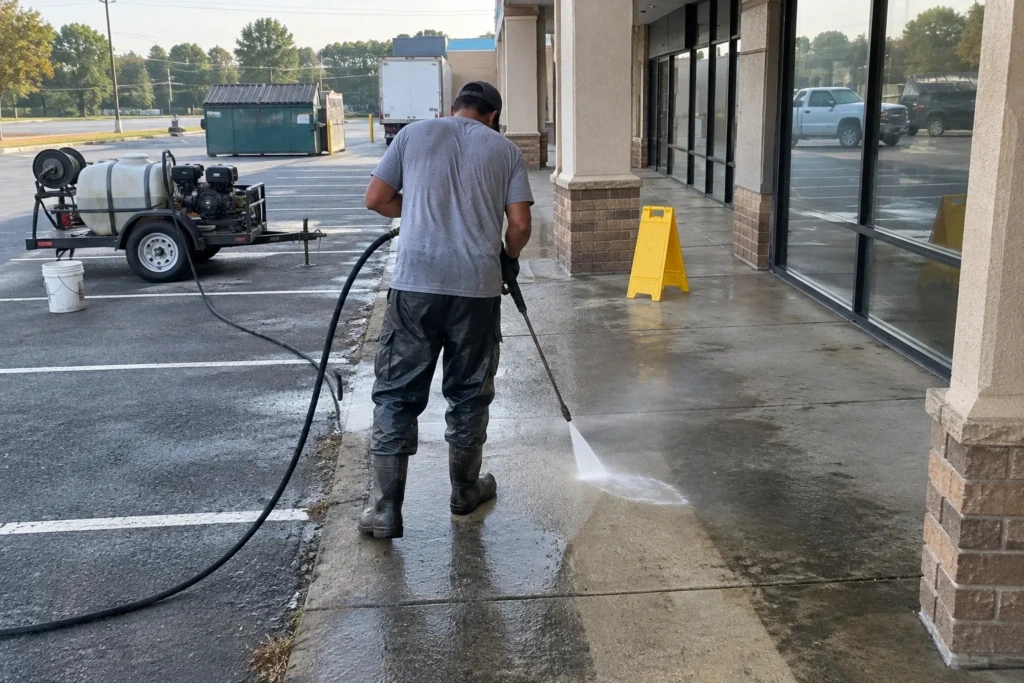
Quick answer: commercial pressure washing in Greenville, SC typically costs about $0.10 to $0.40 per square foot for flatwork such as sidewalks, parking areas, drive-throughs and dumpster pads. Building facades are priced by surface, height and condition rather than by a flat rate. Most storefronts, restaurants and multifamily properties land on a schedule of two to four visits a year, with high-traffic entrances and food service dumpster pads cleaned more often, as frequently as monthly. The real number comes from a written walk-through proposal, because square footage, soil load, access and after-hours scheduling move the price more than anything else.
This guide is for the people who sign the work order: property managers, retail and restaurant owners, and HOA or condo boards. It covers pricing, what moves a bid, how often each property type needs washing, slip hazards, wash water rules, and what to put in an RFP so every bid prices the same job.
How is commercial pressure washing priced?
You will see three pricing models in the Upstate, and a good proposal often mixes them. Ask which one your bid uses so you can compare apples to apples.
Per square foot
This is the standard for flat concrete and pavers. Typical Greenville-area pricing is about $0.10 to $0.40 per square foot. Large, open lots sit at the low end because a surface cleaner covers ground fast. Small, cut-up areas with planters, bollards and stairs sit higher because more of the work is done by hand with a wand. Grease, gum, rust or oil treatment is usually priced on top of the base rate.
Per visit or per job
Storefront entries, restaurant patios and single-building washes are often quoted as a flat per-visit number. Pricing guides we reviewed put a single storefront section at roughly $200 to $1,200 per visit depending on size and soil, while a large facility wash can run into the thousands. The contractor is still estimating square footage and time behind that number, so ask for the breakdown.
Hourly
Hourly billing shows up for graffiti, gum removal and work that is hard to measure in advance. Pricing resources and contractor forums put commercial crew rates roughly at $75 to $200 per hour, with hot water rigs at the top. Hourly only works for you if the proposal caps the hours in writing.
Recurring maintenance plans
Monthly, quarterly or annual agreements are where the best value lives. Two pricing guides we read both note that recurring contracts lower the per-visit price, with discounts commonly in the 15 to 30 percent range, because surfaces never get heavily soiled and the crew can route your property with others nearby. A plan also gives you a dated cleaning record, which matters when a tenant or a slip claim asks what you did and when. Our commercial pressure washing page explains how recurring programs are set up.
Typical commercial pressure washing prices in Greenville, SC
These are typical ranges, not quotes. Minimum charges apply on small jobs because of travel, setup and water handling.
- Sidewalks, walkways and entries: about $0.10 to $0.40 per square foot; small cut-up areas trend higher
- Parking lots: usually the lower end of that range because of open area; oil spots priced separately
- Dumpster pads and drive-throughs: often a flat per-pad or per-visit price because of degreaser, hot water and runoff control
- Building facades and canopies: priced by surface, height and condition after a walk-through; soft washing is the normal method
- Apartment breezeways, stairwells and pool decks: usually priced per building or per amenity, with flatwork at per square foot rates
- Heated water (true power washing): adds roughly 10 to 15 percent, and it is worth it for grease and gum
For a side-by-side look at residential and commercial ranges, see the Greenville pressure washing cost guide.
What actually drives the price up or down?
- Square footage and layout: big and open is cheap per foot; small and complicated is not.
- Soil load: a sidewalk cleaned quarterly costs less per visit than one untouched for three years. Gum, grease, rust and red clay all add treatment time. See why red clay stains concrete faster for why Upstate flatwork goes orange so quickly.
- Surface type: broom finish concrete is fastest. Pavers, stamped concrete, painted surfaces and EIFS need lower pressure and more care. See paver cleaning and sealing for pavers.
- Height and access: anything above a single story may need a lift, which is a line item in the bid.
- Water source: if the crew cannot tie into a spigot they bring water, and that costs money.
- Wash water control: blocking inlets, vacuum recovery and hauling or sewer disposal of dirty water adds labor and equipment, especially at restaurants.
- After-hours work, routing and frequency: overnight work often carries a premium, a property on an existing route gets a better rate, and a regular schedule lowers the per-visit price.
How often should a business pressure wash?
Think in surfaces, not buildings. Adjust these industry baselines upward for shade, tree cover, food service and heavy foot traffic.
Storefront sidewalks and entrances
Every one to three months for busy retail entries, and monthly for shopfronts with constant foot traffic, cafe seating or spilled drinks. The threshold is the first thing a customer sees and the first place algae, gum and grime show. Downtown, where sidewalks are wide and shaded by street trees, green film returns on north-facing entries within a few months of humid weather. The downtown Greenville page covers the brick, stone and paver surfaces common there.
Restaurants, drive-throughs and dumpster pads
Dumpster pads at food service tenants are a monthly item. Grease, food residue and bag drips bring odor, pests and slick footing back fast, and Upstate summer heat makes it worse. Drive-through lanes typically need a wash every month to six weeks because oil and food drips build up where cars idle. Restaurant patios and entries follow the storefront schedule or tighter. Office and retail dumpster pads without food waste can usually go quarterly.
Parking lots and parking garages
Surface lots typically get a full wash quarterly to twice a year, with oil spot treatment in between. Parking garages are shaded, trap exhaust film and tire dust, and their stairwells and elevator lobbies collect the worst of it. Plan on at least twice a year for garage decks and more often for stair towers and the entry level. Oil responds to degreaser and hot water, not more pressure, as our guide to removing oil stains from concrete explains.
Apartment breezeways, stairwells and amenities
Breezeways and stairwells are shaded, damp and walked constantly, so most communities wash them once or twice a year, with pool decks and clubhouse entries done before the busy season and again mid-season. Building siding is usually a once-a-year soft wash after pollen season. Phasing by building keeps disruption down, and the apartment and HOA pressure washing page explains how that is planned.
HOA common areas
Entrance monuments, mailbox clusters, clubhouse, pool deck, sidewalks and retaining walls generally run once or twice a year, often spring and late summer. Shaded sidewalks under mature trees can need a third visit.
Building facades and offices
Once or twice a year. Soft washing at low pressure is the right method for painted surfaces, stucco, EIFS and most siding. The commercial building washing page shows which method fits which wall, and soft washing versus pressure washing explains why pressure is not the answer on walls.
Why the Upstate climate changes the schedule
Three local factors push Upstate properties toward the frequent end of those baselines.
- Pollen season: tree pollen peaks in late March and April, and the yellow dust on sidewalks, awnings and cars is mostly pine. Greenville has ranked in the top ten U.S. cities for seasonal allergies. Many managers book a facade and sidewalk wash for late April or May once the heaviest pollen has passed.
- Humidity and shade: warm, humid summers feed algae and mildew wherever surfaces stay damp, so shaded breezeways, north-facing entries and garage stair towers go green first.
- Red clay: Piedmont soil tracks onto concrete and stains it orange, so entrances near landscaping or construction need attention sooner than an open lot.
Mixed-use districts such as Verdae, with offices, retail and townhomes side by side, usually need a combined plan that runs storefront walks, parking and breezeways on different clocks. Suburban retail corridors around Simpsonville have the same mix of entrances, drive-throughs and dumpster pads.
Off-hours scheduling: what to expect
Most storefront and restaurant work is done before opening, after close or overnight so wet pavement and hoses never meet customers. Tell the contractor your hours, delivery windows and trash pickup day. A sidewalk is usually walkable within an hour in warm weather, longer on a cold morning. For apartments and HOAs, residents should get a notice with the date, the buildings affected, and a request to move cars and clear patios. Overnight work can carry a surcharge, so weigh it against closing an entry during business hours.
Slip hazards and liability: an honest framing
This is general information, not legal advice; talk to your insurance agent or attorney about your own property. The practical point is simple: algae, grease, leaf film and wet pollen are slick, and property owners are generally expected to keep walkways reasonably safe for customers, tenants and employees.
Two public standards show how seriously walking surfaces are taken. OSHA walking-working surface rules (29 CFR 1910.22) require employers to keep walking surfaces clean and, as far as feasible, dry, free of hazards such as spills and leaks, and regularly inspected and maintained. ADA accessibility guidance states that all surfaces of accessible routes must be firm, stable and slip resistant. Neither rule says “pressure wash quarterly,” but a documented cleaning schedule with dates and photos is one of the clearest ways to show you maintained your walkways.
- Ask for before and after photos with each visit and keep them with the invoice.
- Report slick spots between visits (a leaking grease bin, a clogged downspout that keeps a walk wet) so the schedule can be adjusted.
- Ask about slip resistance before any sealer goes on flatwork; some glossy products are slicker when wet.
- Wet floor signage during and right after a wash is a basic expectation.
Wash water and storm drains in Greenville County
Storm drains in Greenville carry water to creeks and rivers, not a treatment plant.Greenville County treats detergent wash water that reaches a storm drain as an illicit discharge, so plan for containment. Cities inside the county run similar programs. Your contractor needs a wash water plan, and you should ask to see it before work starts. Standard practices published by municipal stormwater programs include:
- Dry sweep or blow debris first so less solid material goes into the water.
- Block or cover storm inlets near the work area.
- Contain wash water and recover it with a vacuum where degreasers, oil or heavy grime are involved, especially at dumpster pads and drive-throughs.
- Dispose of collected water to the sanitary sewer with the property owner’s permission, or haul it, never to the street drain.
- Direct plain rinse water to landscaped areas only where that is allowed and the area can absorb it.
The plan should name who is responsible if a discharge occurs, because the property owner can be drawn in alongside the contractor. A contractor who shrugs at this question is telling you something.
What to include in a pressure washing RFP
Municipal pressure washing RFPs share the same bones, and they work for a shopping center or an HOA too. Put these in writing so every bidder prices the same job.
- Property inventory: address, site map, and each surface with approximate square footage (sidewalks, lot, pads, breezeways, pool deck, facades with story count).
- Surface materials: broom concrete, pavers, stamped concrete, brick, stucco or EIFS, painted siding, metal canopies.
- Frequency and scope per surface: monthly, quarterly, twice a year or annual, plus what is included (gum, grease, rust, graffiti) and what is priced separately.
- Methods: soft wash for walls, surface cleaner for flatwork, hot water for grease, no high pressure on painted or stucco surfaces.
- Schedule and hours: allowed work windows, notice to tenants, drying time before reopening.
- Wash water plan: inlet protection, containment, recovery, disposal method, named responsibility.
- Water source and site protection: your spigots or theirs; signage, cones, protection of landscaping, vehicles, glass and electrical.
- Documentation: before and after photos, visit reports, issues noticed (cracked concrete, leaking grease bins, clogged drains).
- Pricing format and term: unit prices per square foot, per-visit totals, add-on line items, minimum charge, contract length and exit terms.
Questions to ask before you sign
- Which pricing model is this bid using, and can you show the square footage you measured?
- What pressure and method will you use on each surface? Walls should be soft washed, flatwork cleaned with a surface cleaner to avoid stripes.
- How will you handle wash water, and who is responsible if it reaches a storm drain?
- Do you bring hot water for grease and gum, and is it included or extra?
- What is the drying time, and how do you protect plants, glass, signage and parked cars?
- What is the arrival window, what happens on a rain day, and will I get photos each visit?
- Can we start with a single visit and move to a plan after?
Red flags in a commercial pressure washing bid
- A price with no measurements: a per-visit number never tied to square footage will drift.
- “We blast everything”: high pressure damages stucco, EIFS, painted block and old brick. The method should change with the surface.
- No wash water plan or no written scope: both become your problem later.
- Bleach on everything: bleach does not remove rust or oil and can harm landscaping if not rinsed. Rust needs an acid-based remover, oil needs a degreaser.
- Low hourly rate with no cap, or pressure to sign a long term today: a good company caps the hours and is happy to earn the plan with a first visit.
When pressure washing is not the right call
Washing will not fix spalling concrete, heaving pavers, failed sealer, peeling paint or structural cracks, and sometimes it makes them more visible. Trip edges need a concrete contractor first, and cracked stucco or EIFS needs a building envelope contractor before any water is applied. A good contractor points these things out on the walk-through, which is usually the best test of who you are hiring.
A simple starting plan by property type
- Single storefront: entry and sidewalk quarterly, facade annually after pollen season, gum and spot treatment as needed.
- Restaurant: dumpster pad and drive-through monthly, patio and entry monthly to quarterly, facade annually.
- Shopping center: storefront walks quarterly, lot twice a year, pads monthly for food tenants, facades once a year.
- Parking garage: stairs and lobbies quarterly, decks twice a year, oil spot treatment each visit.
- Apartment community: breezeways once or twice a year by building, pool deck before and during season, siding annual soft wash, pads monthly.
- HOA: common areas spring and late summer, shaded walks a third time if green returns. Owners can follow the house washing frequency guide for their own homes.
Ready to price your property? Call (864) 477-1558 or request a free quote and we will walk the site with you, measure the surfaces, and put a per-surface scope and schedule in writing.
Sources
- alwaysdobetterllc.com: /how-much-does-commercial-pressure-washing-cost/
- housecallpro.com: /resources/how-to-price-pressure-washing-jobs
- avantigreen.com: /commercial-pressure-washing-surfaces-frequency/
- phs.co.uk: /resources/how-regular-pressure-washing-protects-your-business-property/
- community.windowcleaner.com: /t/pressure-washing-sidewalk-pricing/12809
- osha.gov: /laws-regs/regulations/standardnumber/1910/1910.22
- access-board.gov: /ada/guides/chapter-4-accessible-routes/
- epa.gov: /npdes/stormwater-discharges-municipal-sources
You can get a rough range from square footage and photos, but a firm commercial price almost always needs a walk-through. The contractor has to measure surfaces, check water access, look for grease, rust and gum, and plan where wash water will go. A written proposal after the visit protects you from change orders later.
Usually not. Most storefront and restaurant work is scheduled before opening, after close or overnight, and crews work in sections so one entry stays open. Sidewalks are typically walkable within about an hour in warm weather. Tell the contractor your hours and delivery windows so the schedule is built around them.
It depends on your governing documents. Common areas such as sidewalks, clubhouse, pool deck and entrance monuments are normally association expenses paid from dues or reserves. Siding and roofs on attached units can be either, depending on the declaration. Check the documents before the board approves a scope so the proposal matches who pays.
For grease, gum and food residue, yes. Heated water breaks down grease that cold water only spreads, and it makes gum removal far faster. It typically adds about 10 to 15 percent to a visit. For plain algae and dirt on a sidewalk or lot, cold water with the right cleaner is usually enough.
Most crews connect to an exterior spigot on the property, and the water used on a typical sidewalk or lot visit is modest compared with a commercial water bill. If there is no accessible spigot the contractor brings water, which adds cost. Confirm the water source in the proposal so there are no surprises on either side.
Sweep entries, fix leaking grease bins and clogged downspouts that keep walks wet, and report slick spots to your contractor. Put down mats at doors during pollen season and after rain. Keep a log of complaints and spot cleanings alongside your wash invoices so you have a complete maintenance record if anyone ever asks.
Get a Free Quote
Serving Greenville, SC and the Upstate. Call (864) 477-1558 or request a quote online. We reply quickly to every request.