Mold and Mildew on Siding in Greenville SC: How to Remove It
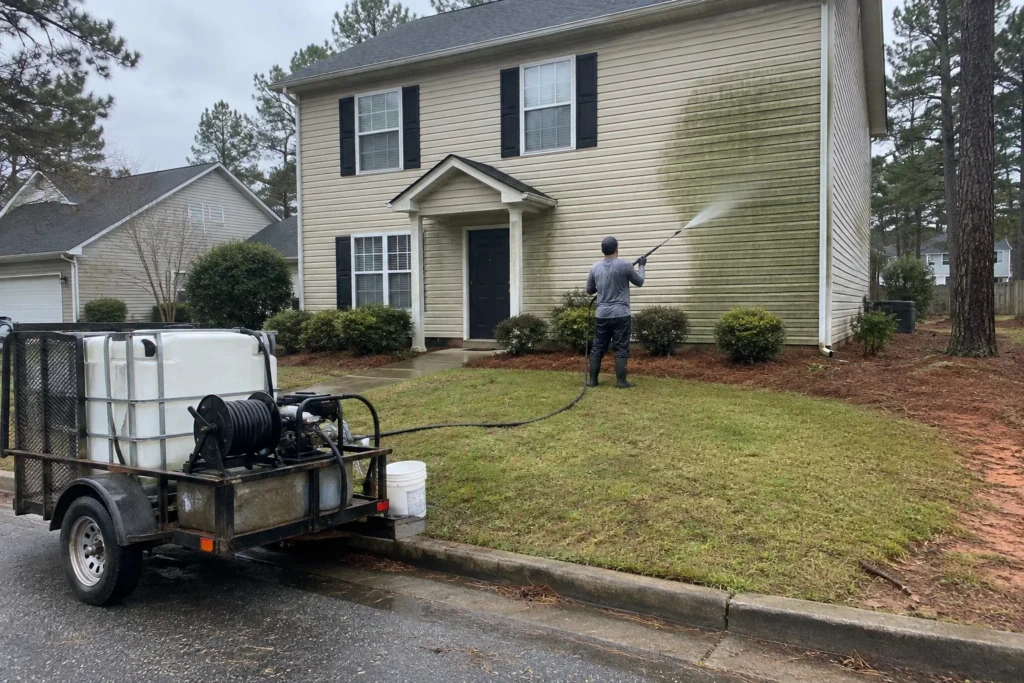
Quick answer: green, black or gray film on siding is usually algae, mildew or mold, and it thrives on shaded, damp walls, which describes a lot of Greenville homes. The safest fix is a low-pressure soft wash: apply a cleaning solution, let it dwell, and rinse gently. High pressure can dent siding and push water behind it, and it often leaves the roots behind so the film returns quickly. For a whole house, a professional soft wash is usually the better route than a DIY blast.
This guide explains what that film is, why it grows here, how to clean it safely, and what to do about the causes. Jump to a section:
- What is the green or black film on my siding?
- Why does it grow on Greenville homes?
- How can I clean light mildew myself?
- Why not just pressure wash it off?
- What does a professional soft wash involve?
- Does the siding type change the approach?
- How do I slow it from coming back?
- What does it cost?
What is the green or black film on my siding?
Several things look alike from the driveway:
- Algae: green, sometimes slimy, common on shaded and north-facing walls.
- Mildew and mold: black, gray or dark green spots or patches that can look fuzzy.
- Pollen and dirt: yellow to brown dust or film that wipes off and washes away easily.
- Rust or clay splash: orange or red-brown marks, often low on the wall where rain splashes red clay up from the ground.
A damp cloth is a simple test. Dust and pollen wipe away. Growth smears or returns within weeks. Rust and clay stains need a different treatment than algae, so identify what you have before choosing a cleaner. Our red clay staining guide covers the splash line.
Why does it grow on Greenville homes?
Algae, mildew and mold need moisture, shade and something to feed on, such as pollen, dust and organic film. Upstate summers are humid, spring pollen coats every surface, and many neighborhoods have mature trees that shade walls for most of the day. Walls near downspouts, sprinklers, shrubs planted tight to the house and the north side of the home tend to show growth first. Newer subdivisions with young trees may see it later, and older shaded streets sooner.
How can I clean light mildew myself?
For a small, light patch on a low wall, a careful DIY approach can work:
- Check your siding maker’s care instructions first.
- Wet nearby plants with fresh water and cover delicate ones.
- Scrub with a soft brush and a mix of white vinegar and water, or a siding cleaner made for your material.
- Rinse with a garden hose from the top down, holding the stream level.
- Rinse the plants again.
Never mix bleach with ammonia or acids, which makes toxic gas. Do not climb a ladder with a wet brush and a bucket if you are not steady. Vinegar is gentler but less dependable on heavy growth.
Why not just pressure wash it off?
High pressure is the most common way homeowners damage siding. Risks include dents and cracks in vinyl, stripped paint on wood, damaged caulk, and water driven up under the laps where it can sit behind the wall. It also tends to strip the visible surface and leave the roots and spores, so green or black film comes back faster. Our soft washing vs pressure washing guide goes through each material, and the pressure washing vs power washing guide explains why heat is also a poor idea on most siding.
What does a professional soft wash involve?
A soft wash uses low pressure and a cleaning solution, commonly a bleach-based mix with a surfactant, to kill growth at the surface. The usual steps are:
- Inspect the siding, caulk and windows, and note any damage or peeling paint.
- Pre-wet landscaping and protect plants, doors, outlets and light fixtures.
- Apply the solution to the wall and let it dwell for the time suited to the surface.
- Rinse gently from the top down, then rinse plants again.
- Check for missed spots and streaks.
The solution strength, dwell time and rinse are the skill. See our house washing service for how this fits a full exterior cleaning. If the roof shows black streaks too, they are usually algae as well and need their own soft wash, covered in the roof algae and moss guide.
Does the siding type change the approach?
- Vinyl: soft wash at low pressure. Keep the stream level and avoid pushing water up under the laps.
- Fiber cement: follow the maker’s care rules. Some makers recommend a hose and soft brush or very low pressure.
- Painted wood and trim: very gentle. Loose or peeling paint should be repaired first.
- Brick and stucco: brick tolerates more but mortar can erode. Stucco needs very low pressure and attention to cracks.
If the siding is cracked, rotting or soft, or if you see mold inside the house, have a siding contractor or other qualified professional assess it before cleaning.
How do I slow it from coming back?
- Let walls dry: trim shrubs and low branches so sun and air reach the wall.
- Fix water sources: aim sprinklers away from the house and keep gutters flowing. See gutter cleaning.
- Clean on a schedule: light, regular cleaning is easier than waiting for heavy buildup. See how often to pressure wash your house.
- Pick the season: late fall and spring are common times. See the best time of year to pressure wash.
No cleaning makes growth impossible, and shaded Greenville walls will green again over time. The goal is to slow it down.
What does it cost?
Typical Greenville-area ranges for a house wash are about $250 to $1,000 or more, or roughly $0.15 to $0.35 per square foot. Two-story homes, heavy growth and hard access cost more. These are typical ranges, not quotes, and the final price comes from a written quote. See the pressure washing cost guide.
Homes in Taylors, Greer, Mauldin and across the Upstate deal with the same humidity and shade.
Want the siding cleaned safely?
Call (864) 477-1558 or request a free quote. Tell us the siding type, how tall the house is and which sides are green, and the quote will spell out the method for each surface.
Sources
- asphaltroofing.org: /algae-discoloration/
Dirt and pollen wipe off and usually look yellow, brown or gray. Algae looks green and slimy, often on shaded north-facing walls. Mildew and mold look black, gray or dark green and can look fuzzy or spotty. A quick test is to wipe a spot with a damp cloth. If it only moves around or returns within weeks, it is growth.
Exterior growth is mainly a cosmetic and surface-damage issue, but some people with allergies or asthma react to mold, so wear protection and keep windows closed during cleaning. If you also find mold indoors, or soft or rotten wall material, have the wall checked by a qualified contractor.
A mix of white vinegar and water is gentler and can work on light mildew. Bleach-based mixes are stronger on heavy growth but can burn plants and discolor some materials. Never mix bleach with ammonia or acids. Check the siding maker's care guidance, and test a small area first.
It can remove the surface layer, but high pressure can dent or crack siding, strip paint and force water behind the laps. Growth often returns fast because the roots remain. A low-pressure soft wash with a cleaning solution is usually the better method.
Shaded walls stay damp longer, and Greenville's humid summers add moisture. North-facing walls, areas under trees and spots near gutters or sprinklers dry slowly, which is what algae and mildew need.
Many homes do well with a cleaning every one to two years, and shaded or tree-covered homes may need it more often. Look at the north side in fall and spring and clean when film appears.
Get a Free Quote
Serving Greenville, SC and the Upstate. Call (864) 477-1558 or request a quote online. We reply quickly to every request.